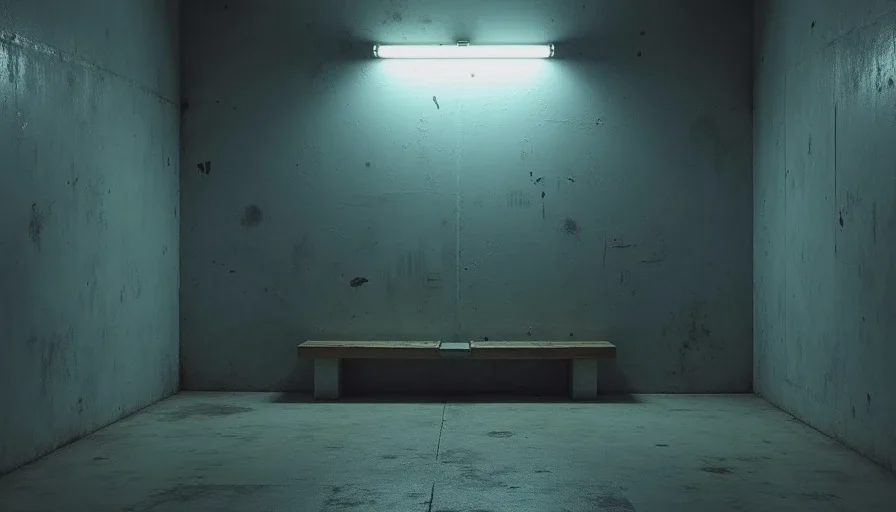
Silence in older games was rarely a void. It was a designed interval. Sixth-generation hardware could not sustain constant layered audio, dense particle effects, or seamless streaming of new content. The resulting gaps—loading screens, sparse corridors, short ambient loops, held shots in cutscenes, save rooms that asked almost nothing—became functional parts of the experience. They gave the previous sequence time to finish its work and the next sequence room to arrive with weight. Modern design has largely treated those gaps as inefficiencies to be removed or filled. The emotional labor they once performed has grown harder to find.
I notice the absence most clearly in the body. After a high-intensity sequence in a contemporary game, the transition into the next area is often already populated with new objectives, ambient dialogue, or collectible prompts. The nervous system receives no clear signal that the pressure has lifted. In many sixth-generation titles the lift was audible and spatial. Footsteps became more distinct. The soundtrack dropped to a single low layer or to nothing. The geometry opened into a space that required only movement and attention. The silence was not empty; it was the medium in which the residual feeling could settle.
Silence as Structural Breathing
Limited memory and disc-streaming constraints forced visible pauses. A loading screen was not only a technical necessity; it was a forced release of control. The player sat with the afterimage of the last encounter while the next area prepared itself. That interval belonged to the player’s interior rather than to the game’s feedback loop. Contemporary seamless loading has eliminated the interruption. It has also eliminated the small, reliable moment in which the game stopped asking for input and simply let the previous temperature persist.

Save rooms and safe corridors performed similar work. Their audio design was frequently minimal: a short looping ambient bed, a single mechanical hum, the sound of the player’s own movement. Because the spaces contained little interactive content, they functioned as pure atmospheric containers. Tension could dissipate without being replaced by new tasks. The player’s breathing and residual adrenaline became part of the soundscape. Many current safe areas are designed as functional hubs—crafting, upgrading, lore, side conversations—so that downtime remains productive. Productivity is not the same as recovery. The older rooms allowed recovery to remain unproductive and therefore more complete.
Cutscene rhythm followed the same principle. Production budgets limited the number and complexity of cinematic sequences, so the ones that existed often held longer on individual shots. A character’s face could remain in frame after a line of dialogue. A camera could linger on an empty doorway or a settling environment. The hold gave the narrative moment time to register before the next piece of information arrived. Modern cutscenes, unconstrained by the same limits, frequently prioritize information density and visual variety. The emotional landing has less quiet surface to settle on.
The Cost of Constant Signal
When every interval is filled, the player’s attention never fully leaves the feedback loop. Ambient dialogue, dynamic music systems, and contextual prompts keep the cognitive channel occupied even during supposed rest. The game remains present. The player’s own residual response has less room to develop. Over a full session the difference accumulates. A game that never risks silence can deliver continuous engagement and still leave a thinner afterimage once the screen goes dark.
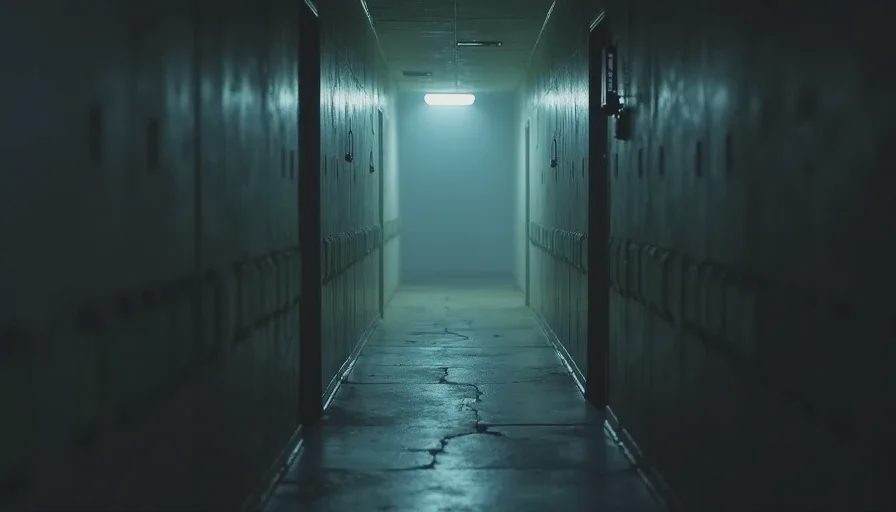
Sixth-generation design did not possess a sophisticated philosophy of negative space. It possessed constraints that made negative space difficult to avoid. Developers learned to make those constraints legible as atmosphere. A quiet hallway was not a failure of content density; it was a calibrated drop in intensity that made the next rise more effective. A sparse ambient loop was not an audio shortcoming; it was a deliberate reduction that kept the environment from competing with the player’s internal state.
I still seek out those intervals. They are the parts of older games that feel most distinct from contemporary production. The silence is not nostalgic. It is functional. It performs the quiet work of letting tension complete its cycle, of allowing spatial memory to form, of giving the player’s own response a place inside the experience rather than constantly overwriting it with new signal.
What Remains Worth Protecting
The practical consequence for an adult player is straightforward. Free time is already scarce. A game that fills every second with content can consume that time efficiently and still return less lasting presence. A game that risks structured silence often returns more presence per hour because the silence itself becomes part of what is remembered.
I do not want the return of long, unskippable loading screens as a virtue. I want the recognition that certain emotional registers require intervals in which the game stops insisting. Those intervals once arrived as side effects of technical limits. They now require deliberate protection. Most current production has little incentive to protect them. The metrics favor continuous engagement. The residual temperature of an experience is harder to measure and easier to sacrifice.
Between frames—between the action, between the dialogue, between the scripted events—older games often left room for the player’s interior life to remain audible. That room was not empty. It was the space in which the rest of the design finished its work. When the room is filled, the work remains incomplete. The silence is what I keep listening for. It is still one of the clearest differences between a game that feels dense while it is running and a game that feels dense after it has stopped.





No notes yet — write the first one.