Pacing is one of the quieter casualties of technical progress. Sixth-generation games did not invent restraint, but they practiced it under conditions that made restraint difficult to avoid. Memory was limited. Draw distances were short. Load times were measurable. Audio budgets forced prioritization. These constraints produced a rhythm that later hardware made optional, then gradually unfashionable. The result is not that modern games are worse. It is that many of them no longer leave the same kind of residue.
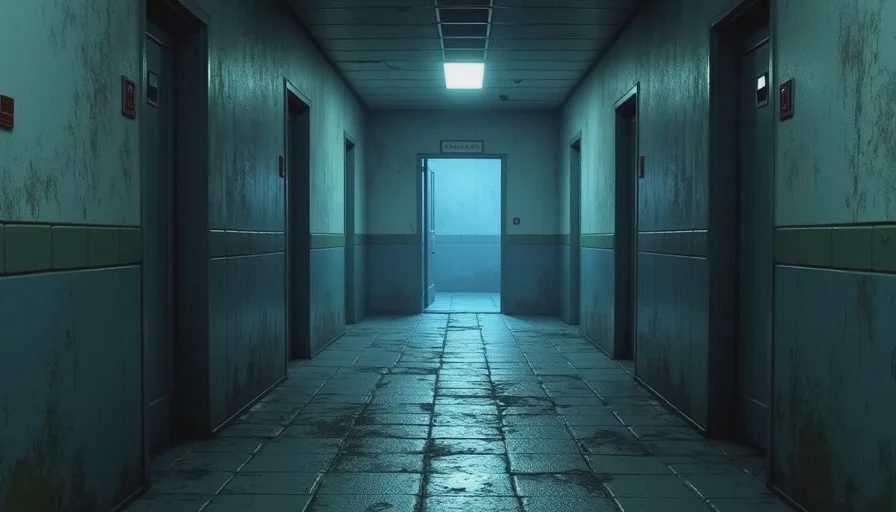
I notice the difference most clearly in the spaces between action. An older title would often give the player a corridor, a short walk, a loading screen, or a save room that asked almost nothing except that the player remain present. The pause was not empty. It was structural. It allowed the previous sequence to settle and the next one to arrive with weight. Modern design tends to treat those intervals as inefficiencies. They are shortened, skipped, or filled with secondary objectives, collectibles, or dialogue that keeps the feedback loop alive. The game rarely risks silence long enough for the silence itself to become part of the experience.
The Structural Value of Friction
Hardware limitations on the PS2, original Xbox, and GameCube forced a particular relationship to time. A level could not stream endlessly without seams. A complex enemy encounter required preparation because the engine could not support constant high-density combat. A cutscene had to be budgeted carefully, so the ones that existed often carried more deliberate framing and longer holds. These were not aesthetic preferences first. They were solutions. Yet the solutions created a pacing grammar that many players internalized without naming it.

Consider the simple act of moving between areas. In a typical mid-budget sixth-generation game the transition often involved a visible load or a short, unskippable corridor. The player had time to register the change in lighting, the shift in ambient sound, the slight alteration in footstep response. That registration was part of orientation. It made the new space feel entered rather than simply continued. Contemporary streaming technology can eliminate the interruption. The cost is that the sense of having arrived somewhere specific grows thinner. The world becomes continuous, which is technically impressive, and less punctuated, which is experientially flatter.
The same pattern appears in combat and exploration loops. Older games frequently separated periods of high pressure from periods of lower pressure with clearer boundaries. A difficult encounter would end, and the player would be given a stretch of relative quiet—sometimes only a minute or two—before the next escalation. That quiet was not always filled with narrative or side content. It existed so the tension could dissipate and reform. Modern design often prefers a more constant gradient of engagement. The peaks are higher and more frequent; the troughs are shallower and shorter. Players report less fatigue in the moment and, later, less distinct memory of any particular sequence.
Silence as Design Material
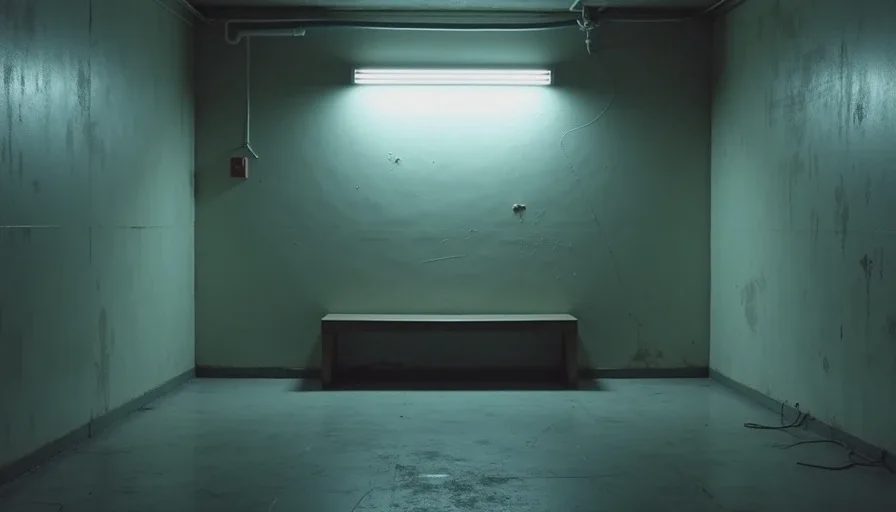
Silence was cheaper than content. That economic fact produced some of the era’s most effective atmospheric work. A save room with a short ambient loop and a single light source did not need elaborate scripting. It needed only enough presence to feel safe without feeling empty. The player’s own breathing and the residual adrenaline from the previous section did the rest. Many current games still include safe rooms or hub spaces, yet they are rarely allowed to remain sparse. Crafting stations, lore entries, cosmetic vendors, and optional dialogue are added until the space functions more like a menu than a place.
I am not arguing for the return of long, unskippable loads as a virtue in themselves. I am noting what those loads once permitted. They created a forced interval in which the player’s attention could drift inward. The game released control for a moment. In that release, the emotional temperature of the preceding section had room to finish its work. When every transition is seamless and every quiet space is populated with interactive potential, the game never fully releases control. The player stays inside the feedback loop even while “resting.” The residue has less surface to settle on.
Cutscene rhythm followed a similar logic. Because cinematic sequences were expensive in memory and production time, they were used more sparingly and often held longer on individual shots. A character’s face could remain in frame while a line of dialogue landed. A camera could linger on an empty doorway after a threat had passed. Contemporary cutscenes, unconstrained by the same budgets, frequently cut faster and pack more information into the same runtime. The technical capacity is greater. The experiential density is not automatically improved.
What the Loss Feels Like
The practical consequence for an adult player with limited evening hours is subtle but cumulative. A modern game can deliver more content per session and still leave less of a distinct afterimage. The pacing has been optimized for continuous engagement rather than for the formation of memory. Sixth-generation titles, working under tighter constraints, often produced stronger afterimages precisely because they could not keep the player stimulated at every moment. The gaps became part of the texture.
This is not a call to restore artificial difficulty or to romanticize inconvenience. Some of the old pacing was simply the result of incomplete tools. What is worth recovering is the recognition that certain kinds of emotional work require time that is not immediately productive. A corridor that exists only to be walked. A loading screen that exists only to be waited through. A save room that exists only to be sat in. These intervals once taught players that the game’s world continued even when the player was not being actively rewarded. That lesson has become rarer.
I still return to certain older games less for their systems or their stories than for the way they handle the spaces between. The temperature of those intervals remains distinct. They do not apologize for asking the player to wait, to walk, or to listen to almost nothing. In a media environment that treats every second of potential disengagement as a design failure, that refusal continues to feel like a form of respect—respect for the material, and for the possibility that the player’s interior life might still have a role in the experience.
The sixth generation did not possess a secret philosophy of pacing. It possessed limits that made a particular rhythm difficult to avoid. We have spent the years since learning how to avoid it. The cost of that learning is measurable in the number of games that feel full while they are running and thinner once they are turned off. The residue is what I miss. It is also what I keep trying to describe.





No notes yet — write the first one.