
Most conversations about older games eventually reach the same fork: either the title is treated as a candidate for remaster, or it is left to dissolve into general “PS2 era” nostalgia. Both paths tend to flatten what made certain mid-budget games specific. A remaster usually prioritizes legibility, convenience, and visual coherence for new hardware. Nostalgia prioritizes the feeling of having been there. Neither is the same as archaeology—the slower work of recovering how a game used its limits, what emotional labor those limits performed, and why the resulting temperature still feels different from most current production.
The three games below never became prestige objects. They were too strange, too cruel, or too narrowly focused to be easily marketed as timeless classics. That narrowness is exactly why they repay careful looking. Each one contains design decisions that later, better-funded projects often sanded away in the name of accessibility or spectacle. None of them need a modern coat of paint as much as they need readers willing to sit with what they already are.
Siren (2003)
Keiichiro Toyama’s Siren remains one of the clearest examples of a game whose central systems were shaped by constraint and then turned into atmosphere. The sightjacking mechanic—tapping into the vision of the shibito—was not a gimmick layered on top of a conventional stealth game. It was the primary way the player understood space, threat, and the interlocking timelines of the village. Because the hardware could not support large numbers of complex AI agents in open environments, the design folded perception itself into the core loop. You did not simply hide. You borrowed the enemy’s eyes and learned the village through that borrowed, unstable gaze.
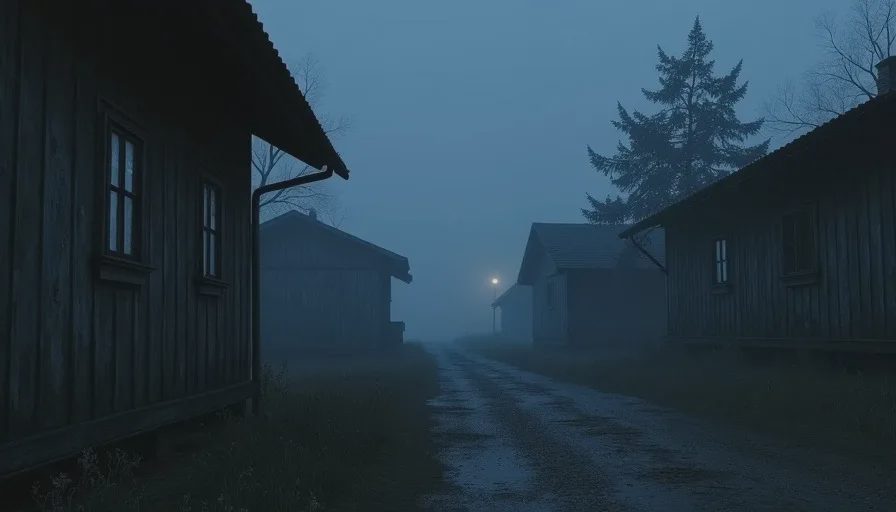
The result is a kind of spatial dread that later horror games rarely replicate. Modern titles can populate denser spaces with more reactive enemies and cleaner stealth tools. What they often lose is the specific alienation of seeing the world through something that is no longer human and realizing the map itself has become hostile. Siren’s rural Japanese setting is not window dressing. The narrow paths, the low wooden architecture, the way sound carries across water and through fog—all of it was tuned to the limitations of the engine and the memory budget. The game could not afford constant spectacle, so it made scarcity legible as presence.
A remaster that simply raised the resolution and smoothed the controls would risk turning that scarcity into a historical curiosity. The original’s awkwardness is part of the temperature. The slightly stiff character movement, the deliberate pacing between sightjack moments, the way the secondary characters’ stories interlock without ever becoming a conventional campaign—these are not flaws waiting for correction. They are the method. Archaeology here means recovering how the vision system and the timeline structure worked together under pressure, not asking how the game would look with contemporary lighting.
Rule of Rose (2006)
Rule of Rose is frequently reduced to its controversy or its surface aesthetic of girls, dolls, and institutional cruelty. That reduction is a form of forgetting. What the game actually does is more precise and more limited. It uses a very small set of spaces, a constrained inventory of objects, and a deliberately theatrical performance style to create a closed emotional system. The animal-masked children, the gift-giving economy, the way affection and violence occupy the same gestures—these are not atmospheric seasoning. They are the entire grammar.
The production was mid-budget and it shows. Animations are limited. Environments repeat. The combat is rudimentary. Yet the game turns those limitations into a kind of dollhouse logic. Everything feels staged, slightly under-resourced, and therefore more intimate. The player is never allowed the relief of a large, explorable world that might dilute the social pressure. The orphanage and its immediate grounds become a complete moral weather system. Modern horror with higher production values can generate more jump scares or more elaborate lore. It rarely generates the same sense of being trapped inside a children’s game whose rules are both arbitrary and absolute.
Rule of Rose never received a serious remaster, and it is easy to see why. The material is difficult to market, and any attempt to “improve” the presentation would likely erase the theatrical stiffness that makes the cruelty feel ritual rather than sensational. Archaeology in this case means reading the game as a finished, narrow object: a study in how limited means and a consistent emotional register can produce a more lasting unease than spectacle. The doll faces, the dried flowers, the small acts of exchange—these details still carry more charge than most contemporary attempts at the same themes because they were never allowed to become expansive.
Haunting Ground (2005)
Haunting Ground is often remembered, when it is remembered at all, for its dog and its pursuers. Both are memorable. Neither is the whole design. The game’s real interest lies in how it handles vulnerability as a persistent state rather than a temporary condition. Fiona’s movement, the stamina system, the way the camera and the sound design keep the player slightly off-balance—these elements work together to prevent the usual horror-game rhythm of tension and release. Safety is never fully established. Even the few quiet rooms carry the residue of the last pursuit.

The PS2 hardware again shaped the result. The environments are detailed but contained. The enemy behaviors are readable once learned, yet the learning process itself is costly because failure is frequent and the recovery is never clean. Hewie the dog is not a power fantasy companion. He is another limited resource whose reliability must be managed. The relationship is mechanical and emotional at the same time. Later games have offered more sophisticated AI partners and more elaborate stalking sequences. Few have matched the specific fatigue Haunting Ground produces—the sense that the player’s own body, as represented by Fiona’s, is part of the resource economy.
A contemporary remaster would almost certainly smooth the stamina management, clean up the camera, and make the dog more consistently helpful. Each of those changes would remove part of the temperature. The original’s awkwardness is not accidental. It keeps the player inside a continuous state of managed vulnerability. That state is what still feels distinct. Archaeology here means mapping how the systems of movement, stamina, companion, and space reinforce one another under the constraints of the platform, rather than asking how the game could be made more comfortable for current audiences.
These three titles share a quality that prestige canon tends to edit out: they are willing to remain narrow. They do not offer the player a large toolbox or a generous world. They offer a specific set of pressures and then stay inside them long enough for the pressures to become atmospheric. Remasters, by design, usually widen and smooth. Nostalgia packages the memory of pressure without the pressure itself. Archaeology is the slower alternative. It leaves the limits visible and asks what those limits made possible.
None of these games need to be declared masterpieces. They need to be read with the same attention their original developers once applied to very finite memory budgets and very particular emotional registers. The work is not to restore them to some imagined commercial viability. The work is to keep the decisions readable for as long as the discs still spin.





No notes yet — write the first one.