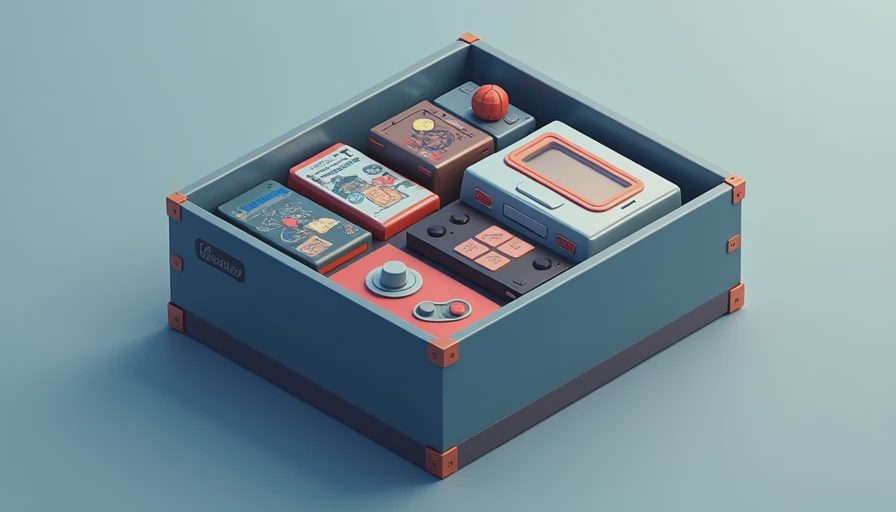
A Toy Story game collection is less a neat shelf of identical merchandise than a record of how licensed games changed between the 16-bit era, the sixth console generation, and the age of downloadable extras. Some entries are direct film adaptations. Others use the characters as an excuse for racing, minigames, or a larger toy-box playground. For adults who remember the PlayStation 2 startup chime and the plastic clatter of a GameCube controller, that difference matters. The games do not all preserve the films equally, but they reveal what developers thought a Pixar world needed to feel interactive.
The useful question is not whether every game is essential. It is what each one does with limitation. Fixed camera angles, short levels, compressed music, and awkward menus sometimes create a strange intimacy that newer presentation would erase. Higher resolution is not the same thing as higher memory.
The original Toy Story game is a technical time capsule
The first Toy Story game appeared during the period when a film’s computer animation was still treated like a technical miracle. Versions released for systems including the Super Nintendo, Sega Genesis, and PC approached the material differently, with platforming and obstacle courses built around familiar characters and locations. The result is uneven, but the unevenness is historically useful. Developers were translating a movie about toys becoming alive into machines that had very limited room for voices, animation frames, and visual detail.
On a modern screen, the older sprite work can look blunt. That is not the whole story. The small character animations communicate weight through repetition: a jump, a fall, a run cycle, a pause beside an obstacle. The game often feels like an approximation made under pressure, which gives it more personality than a perfectly smooth but anonymous licensed product. It is difficult in places, sometimes for reasons that have little to do with good design, yet the friction tells you what the era could not comfortably hide.
A practical Toy Story game collection should treat this first title as an archival piece rather than the best starting point. Emulation can make the game easier to sample, while original cartridges and manuals remain appealing for collectors who care about packaging and regional versions. The important thing is to approach it as a document of translation, not as a lost Pixar masterpiece.
Toy Story 2 found the strongest platforming language
Toy Story 2: Buzz Lightyear to the Rescue is the entry most likely to anchor a Toy Story game collection. Released across platforms such as PlayStation, Nintendo 64, Dreamcast, and PC, it moved beyond simply replaying movie scenes. Buzz explores distinct areas, gathers Pizza Planet tokens, searches for collectibles, and navigates spaces that make a bedroom, yard, or airport baggage area feel oversized and hazardous.
Its design belongs to the same broad family as late-1990s 3D platformers, but it has a different emotional scale. A child’s room becomes a landscape. A garden becomes a wilderness. The level structure gives ordinary objects a second life, which is also the central emotional mechanism of the films. You are not only moving through a platforming course; you are learning how a familiar room looks when you are six inches tall.
The PlayStation version has the particular haze of that hardware: softened textures, distant geometry, and a visual image that can seem slightly unstable. The Dreamcast edition is cleaner, while Nintendo 64 hardware handles the game through its own compromises. Those distinctions are worth noticing, but none automatically cancels the others. Some improvements are real. Some are only brighter. A Toy Story game collection becomes more interesting when the original versions are compared instead of ranked by resolution alone.
Toy Story Racer is smaller, stranger, and worth remembering
Toy Story Racer is easy to dismiss because it does not offer a conventional story campaign. It is a kart racer built around the film’s cast, tracks, power-ups, and unlockable content. Yet it captures a specific late-PlayStation instinct: if a license has recognizable characters, put them in vehicles and build a party game around them.
The racing itself is not likely to replace Mario Kart in anyone’s permanent rotation. Handling can feel loose, and the tracks do not always have the clarity of Nintendo’s best courses. Still, the game has a particular charm when played with another person on the couch. Its value is social and contextual. It represents the period when a game could be modest, complete, and slightly awkward without being immediately framed as a failure of brand management.
For a Toy Story game collection, Racer works as a side room rather than a centerpiece. It shows how quickly a movie property could be stretched into another genre, and how licensed games often carried the residue of their hardware. Loading pauses, simple arenas, and compressed sound are not just defects. They are part of the room tone.
Toy Story 3 is the most ambitious modern adaptation
Toy Story 3 arrived in 2010 on multiple platforms, including PlayStation 3, Xbox 360, Wii, and PC, with versions shaped by their hardware. Its story mode follows the film more directly, but the Toy Box mode is the more revealing feature. It allows players to move around a western-themed town, complete activities, customize elements, and engage with the characters outside a strict sequence of movie events.
That structure gives the game more breathing room than many licensed adaptations. The movie supplies emotional momentum; the Toy Box provides repetition and play. You can return to a familiar hub, complete another task, and let the world sit quietly between objectives. It is not an infinite sandbox, and it does not need to be. Its appeal comes from the sense that the toys have somewhere to exist when the camera is not following the film’s main plot.
The console versions also show a transitional moment in family games. The presentation is more polished than the older entries, but it still contains directness that many modern service games have lost. There are goals, rewards, and unlocks, yet the structure generally points toward a finished experience rather than endless engagement. A Toy Story game collection feels incomplete without it because this is where the license came closest to combining narrative adaptation with a playable toy box.
How to build the collection without buying everything
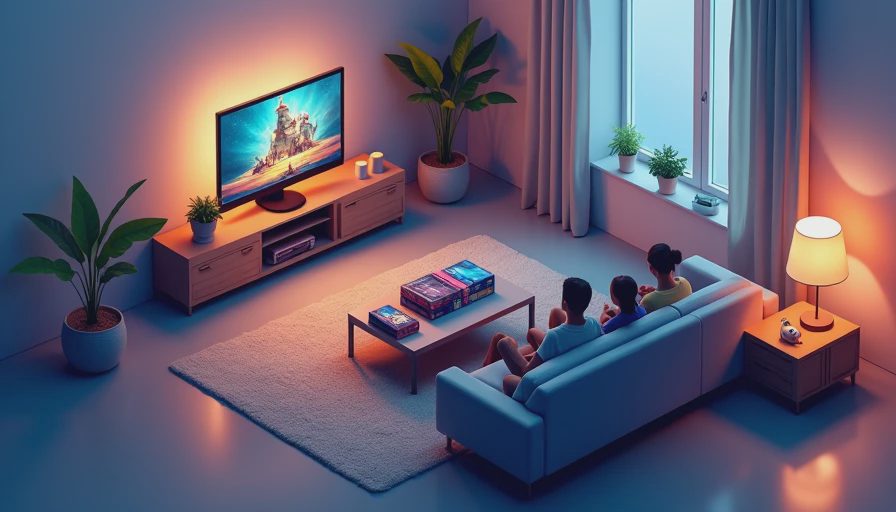
Start with Toy Story 2: Buzz Lightyear to the Rescue if you want the clearest platforming experience. Choose the version you can play comfortably, then compare another port only if technical history interests you. The Dreamcast release is attractive for image quality, while the PlayStation edition preserves the original atmosphere many players remember. Regional availability and resale prices change, so avoid paying a premium simply because a listing calls a copy rare.
Add Toy Story 3 for the broader, more forgiving adventure. It is usually the better recommendation for a limited modern schedule because its controls and objectives are easier to understand, and the Toy Box mode gives the collection a second rhythm. The original Toy Story belongs next, especially for anyone interested in 16-bit adaptation history. Toy Story Racer is optional but valuable when the collection is meant to represent the whole commercial ecosystem rather than only the strongest games.
Before purchasing, check the platform, disc condition, included manual, and whether a rerelease actually contains the same version. A used copy can cost more because of packaging than because of the game itself. For preservation-minded players, screenshots, manuals, and recorded footage can be as important as ownership.
The quiet value of a Toy Story game collection
The best reason to explore a Toy Story game collection is not nostalgia in its most polished form. It is the chance to see a familiar story pass through several design languages. One game reduces a living world to sprites. Another turns a bedroom into a 3D obstacle course. A later entry opens a small town and asks what the characters do between scenes.
That progression carries a mild sadness. Each generation improves the image while changing the texture of memory. The older games are not necessarily better, and the newer ones are not automatically more faithful. They are different records of what players, hardware, and publishers expected at the time.
If you have one evening, play Toy Story 2. If you have a weekend, try Toy Story 3’s Toy Box mode afterward. Then sample the earlier titles with patience and a willingness to let awkwardness remain visible. A game can become cleaner and less alive at the same time. This collection matters because it lets both truths sit together.



No notes yet — write the first one.