Vigilant Paradise is the kind of title that sounds welcoming until you examine both words. Paradise promises safety, color, and escape. Vigilant introduces the watchtower, the locked door, the feeling that something is standing just beyond the visible edge. That contradiction is more interesting than any simple promise of retro comfort. It suggests a game, or a game memory, built around beauty that cannot quite be trusted.
For players who came of age with the PlayStation 2, original Xbox, and GameCube, that tension feels familiar. Older games often made their limitations visible. A distant landscape might be a flat image, a hallway might repeat its texture, and a character's face might communicate emotion through a few carefully chosen angles. Those limits did not automatically create atmosphere, but they gave atmosphere somewhere to hide. Vigilant Paradise feels like a useful name for that particular kind of unease.
Why Vigilant Paradise sounds older than it is
The phrase has the cadence of a forgotten mid-budget game: concise, slightly dramatic, and more interested in mood than marketability. It does not explain its genre. It could describe a survival horror setting, an experimental adventure, a science-fiction colony, or an island that has mistaken surveillance for peace. That ambiguity matters because many sixth-generation games trusted players to enter a space before understanding it.
Modern presentation often gives away the emotional contract immediately. Menus are clean, trailers are bright, and every major mechanic is introduced with the efficiency of a software demonstration. A title like Vigilant Paradise resists that efficiency. It leaves a gap between expectation and information. The reader has to fill that gap with a personal fear: isolation, artificial comfort, or the suspicion that a perfect environment is being maintained by imperfect means.
Higher resolution is not the same thing as higher memory. What remains from an old game is often not its polygon count, but the strange pressure created by a room, a loading pause, or a soundtrack that allowed several seconds of silence to pass without apology.
Beauty with a security system underneath
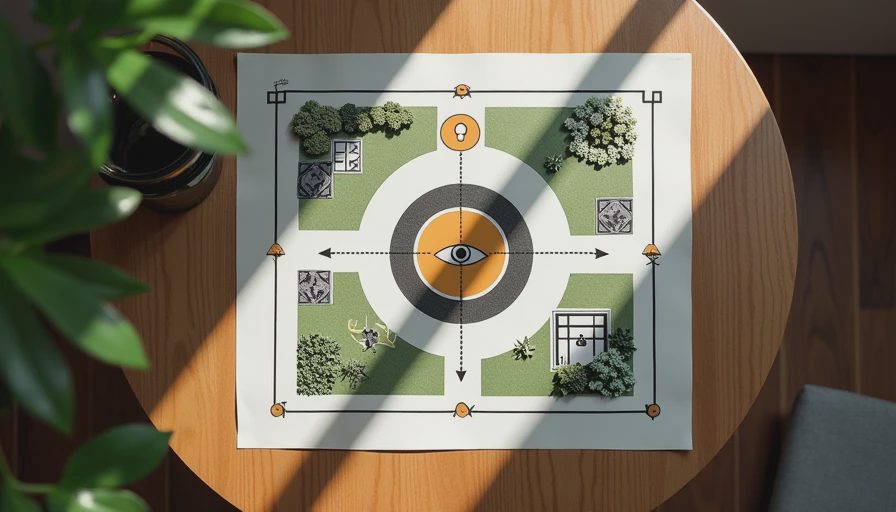
The most compelling reading of Vigilant Paradise is not that paradise has failed. It is that paradise is functioning exactly as designed, and that design has become threatening. The grass is green because someone controls the climate. The streets are empty because someone controls access. The calm music continues because the system has learned that calm is easier to administer than grief.
This is where the title becomes more than atmospheric decoration. Vigilance is an active state. It asks who is watching, what they are waiting for, and whether the player is included in the group being protected. A game built around that premise would not need constant enemies. A camera pointed at a quiet corridor could be enough. The discomfort would come from knowing that the corridor is quiet on purpose.
That design philosophy belongs to an era when developers frequently used absence as a tool. A missing NPC, an unmarked doorway, or a room containing only one suspicious object could carry more weight than a paragraph of exposition. The player was not told what mattered. The player had to notice what the environment was refusing to explain.
The sixth-generation texture of unease
There is a particular visual language associated with older console worlds: low-resolution surfaces, heavy shadows, fog that hides technical limits, and lighting that can turn an ordinary hallway into an accusation. These techniques were practical solutions, but they also produced emotional side effects. Distance became uncertainty. Darkness became a physical boundary. A loading transition became a breath held between locations.
If Vigilant Paradise belongs in that tradition, its appeal would not depend on reproducing blurry textures for their own sake. The important question would be whether its visual roughness creates interpretation. A perfectly readable room tells you where everything is. A room softened by darkness and imperfect geometry makes you participate. You look longer. You remember the shape incorrectly. When you return, the space has changed because your memory has.
Some improvements are real. Better frame pacing can make movement clearer, and sharper text can remove unnecessary friction. But a cleaner image can also flatten the uncertainty that made a place feel inhabited. A game can become cleaner and less alive at the same time.
What a thoughtful revival should preserve
A modern release inspired by Vigilant Paradise should resist the temptation to brighten every corner. Remastering is not the same as restoration when atmosphere depends on obstruction. The best approach would preserve the original rhythm while improving the parts that genuinely interfere with play: unstable controls, unreadable menus, unreliable saves, and performance problems that were never expressive.
The sound mix would deserve equal care. Older games often used compressed audio, looping tracks, and abrupt transitions, yet those constraints could produce a distinctive emotional grain. Replacing every rough sample with a cinematic orchestra would be an easy mistake. The goal should be to clarify the original signal, not replace it with a more expensive one.
Vigilant Paradise should also keep some empty space. Do not fill every hallway with collectibles. Do not add dialogue to explain every locked gate. Let the player spend a minute walking through a beautiful location that appears to have no immediate purpose. That is not wasted time when the game is teaching the player how to listen.

Who should spend time with this idea
This is for players who have less free time now but stronger opinions about how games use it. Someone with a demanding job may not want a sixty-hour checklist, but they may still want a world that trusts them with uncertainty. Vigilant Paradise speaks to that appetite because the phrase suggests a compact experience with a long afterimage.
It also belongs to anyone tired of nostalgia that treats the past as a display cabinet. The value of older design is not that every decision was good. Many games were awkward, padded, technically uneven, or needlessly obscure. Their value is that their compromises were visible. You could feel the boundary between what the hardware could show and what your imagination supplied.
That boundary is where memory becomes active rather than decorative. You do not simply remember the image. You remember what you believed might be behind it.
Final thoughts on Vigilant Paradise
Vigilant Paradise is compelling because it describes a contradiction most polished entertainment tries to remove. It offers refuge, then asks why the refuge requires surveillance. It promises beauty, then makes beauty feel like evidence. That is a stronger foundation for a retro-game experience than another collection of familiar references.
The title does not need to be loud to stay with you. It only needs one silent room, one view that looks too peaceful, and one reason to suspect the calm is being maintained. For players who remember when technical limitations could become emotional instruments, that is enough. The paradise can remain beautiful. The important thing is that you never stop watching it watch you.





No notes yet — write the first one.