Gaming News is easy to consume and difficult to remember. A trailer arrives, a patch note scrolls past, and another confident opinion replaces it before the coffee has cooled. For players who grew up with the PlayStation 2, original Xbox, and GameCube, that speed can feel strangely hostile. Games were once objects you lived with for weeks because there was no update waiting to revise the experience overnight. This blog treats current stories as evidence: clues about what developers value, what publishers fear, and what players are being asked to forget.
Why Gaming News Needs More Than a Release Date
A release date is useful, but it is rarely the most important fact. The more revealing questions are often quieter. Is a remake preserving the original camera behavior, or replacing it with a modern template? Has a patch removed an inconvenience that was actually part of the game’s rhythm? Does a new console feature make a game more accessible, or simply make its menus brighter and more crowded?
Good Gaming News should answer those questions without pretending that technical information is emotionally neutral. A resolution increase can clarify distant geometry while flattening the murky lighting that made a hallway feel unsafe. A stable frame rate can improve control while changing the deliberate hesitation built into an older system. Some improvements are real. Some are only brighter.
I am interested in the space between announcement and consequence. A publisher can describe a remaster as definitive, but the useful test begins when someone compares its shadows, audio mix, loading transitions, and interface language with the original. Higher resolution is not the same thing as higher memory.
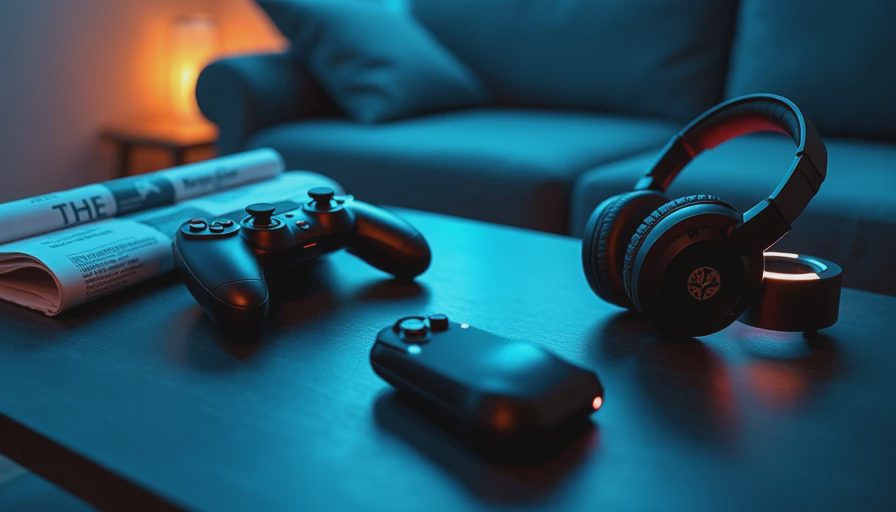
Reading Gaming News Without Chasing Every Alarm
The modern news cycle rewards panic. A studio closure, delayed launch, acquisition, or controversial trailer becomes a moral emergency for several hours, then disappears beneath a new one. This creates a poor way to understand games. It trains readers to respond to the loudest sentence rather than follow the systems underneath it.
When I read Gaming News, I separate confirmed information from interpretation. A developer announcement is one layer. A reported production problem is another. Community reaction is valuable, but it is not automatically proof of what happened. That distinction matters when discussing layoffs, performance problems, monetization, or a game that looks different from an early demonstration.
This does not mean writing without an opinion. It means earning the opinion. If a publisher adds a battle pass to a previously premium game, examine the reward structure, the time pressure, and the way progression is divided. If an update removes a mechanic, ask what that mechanic made the player notice. The patch note may say “quality of life.” The player may experience a loss of texture.
What Remasters Reveal About the Past
Remasters are unusually honest forms of Gaming News because they place two versions of history beside each other. The new image may be cleaner, sharper, and easier to read on a modern television. Yet the original can retain a visual grammar that the remaster does not understand: blue shadows, low-resolution faces, fog hiding a short draw distance, or a soundtrack that sits slightly too loud against the room tone.
Consider a sixth-generation horror game. Its limitations may have forced designers to use fixed cameras, narrow corridors, and carefully timed loading screens. Those constraints created pauses. They made the player imagine what was beyond the frame. A remake that opens every angle and fills every surface with detail can improve navigation while eliminating uncertainty.
The right comparison is not “old versus bad” or “new versus good.” It is more precise to ask what each version asks the player to feel. The original might feel lonely because the world is sparse. The remaster might feel lonely because the world has been rebuilt with immaculate distance. Both can work, but they are not delivering the same emotional signal.
The Patch Notes Behind the Headline
Patch notes are often treated as administrative material, though they can reveal an entire design philosophy. “Reduced enemy aggression” changes more than difficulty. It changes how long a player can study a room. “Increased resource drops” changes the meaning of preparation. “Improved traversal” can turn a tense route into a commute.
This is where Gaming News becomes useful for adults with limited free time. A patch can make a thirty-hour game more manageable without making it shallow. It can also remove the friction that gave the game its identity. The difference depends on where the friction lives. Waiting for a slow menu is usually waste. Choosing whether to spend scarce ammunition is a decision. Treating both as inconvenience produces a smoother, less memorable game.
I like to compare launch behavior with the current version before making a judgment. Watch an unpatched clip if possible. Read the exact adjustment. Then ask whether the change affects strategy, pacing, or atmosphere. A small numerical tweak can matter more than a new texture pack if it changes the player’s relationship with risk.
A Better Way to Follow Gaming News
A useful reading habit does not require following every rumor account. Start with a few dependable categories: confirmed announcements, technical analysis, developer interviews, platform policy, and long-term criticism. Give each story time to become specific. The first trailer is a promise. The launch build is an argument. The months after release are the evidence.
For a new game, I look at three things before deciding whether it deserves attention. First, what is the core action, and does the design support it consistently? Second, what compromises are visible in performance, monetization, or pacing? Third, what kind of player time does the game demand? A ninety-minute experiment and a seventy-hour live-service commitment should not be judged by the same scale.
This approach also protects the reader from manufactured urgency. Not every surprise announcement deserves a preorder. Not every ugly screenshot means failure. Waiting for a sale, a performance patch, or a complete edition is not cynicism. Sometimes patience is the only way to see the work without the publisher’s lighting around it.
What You Will Find Here
Memory Card Theology covers Gaming News through four connected lenses. Cold Storage looks for forgotten PS2, Xbox, and GameCube games that were too strange or modest to become accepted classics. Original Signal compares remasters with their sources, including color grading, frame pacing, textures, sound, and interface changes. The Patch Notes examines the mathematics and assumptions hidden inside updates. Between Frames considers silence, environmental storytelling, music, and the spaces where games become more than systems.
The goal is not to reject new games in favor of an idealized past. The sixth generation had bad cameras, awkward saves, uneven translations, and plenty of design that deserved to be left behind. But it also had room for mid-budget experiments and uncomfortable pauses. Current Gaming News is worth reading when it helps us recognize which of those qualities are returning, which are disappearing, and why the difference matters.
If you want headlines stripped of panic and nostalgia polished into something more honest, stay here. Bring the game you remember, the remaster you distrust, or the patch that quietly changed everything. We will look closely. A game can become cleaner and less alive at the same time.




No notes yet — write the first one.