Indie Games are often marketed as an endless stream of charming pixels, strange premises, and low-budget sincerity. That description is not wrong, but it is incomplete. The best small-team releases do something more difficult: they turn limitation into a design language. With fewer rooms, fewer animations, or a smaller cast, they make each choice feel unusually deliberate. For players who grew up with the PlayStation 2, original Xbox, and GameCube, that focus can feel familiar without becoming a museum piece. There is less spectacle to process, and sometimes more room to remember what a game is doing.
Why Indie Games Still Matter After the Nostalgia Wears Off
The appeal is not simply that these games look retro. Plenty of modern releases use scanlines, chunky fonts, or low-resolution textures as costume. The more interesting Indie Games understand why older hardware produced a particular rhythm. A corridor lasted longer because loading had to happen behind it. A distant object stayed indistinct because the system could not draw it clearly. A sound cue carried more weight because the soundtrack could not fill every second.
That restraint can create atmosphere that expensive productions smooth away. A game with twelve hours of content might leave a sharper impression than a sixty-hour open-world map if its spaces have a point of view. The question is not whether the game contains more content. It is whether the content has enough silence around it to become memorable.
This is where a mature player’s limited free time becomes an advantage. You learn to recognize systems that are asking for commitment without offering much in return. You notice when a crafting menu is only a delay between you and the next interesting room. The strongest small releases respect your attention by making their mechanics, interface, and pacing serve the same emotional purpose.
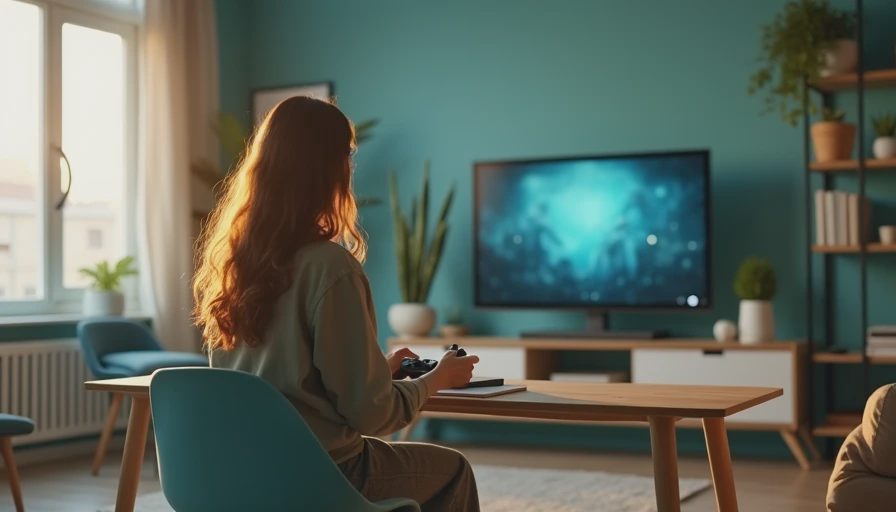
Finding Design Instead of Decoration
Good Indie Games usually have a visible center of gravity. It might be a combat loop built around positioning, a narrative about unreliable memory, or an environment that slowly changes as you understand it. You can often describe the central idea in one sentence, but that does not mean the game is simple. It means the surrounding decisions are aligned.
Consider a fictional example: a compact horror game set in a closed shopping mall after the final bus leaves. Its strongest feature would not be the abandoned storefronts alone. The important design choice might be that the mall becomes quieter as the player learns more, removing music and crowd noise rather than adding threats. The empty food court then carries narrative information. The quiet is not decoration; it is the system speaking.
That distinction helps separate lasting work from attractive clutter. A beautiful pixel-art game can still have weak exploration if every room contains the same reward. A deliberately ugly game can be powerful if its visual limits support its subject. Higher resolution is not the same thing as higher memory. A sharper image can show more detail while giving the player less to interpret.
Look closely at interfaces, too. A map that refuses to reveal everything may create uncertainty, while a perfectly labeled objective marker can turn a place into a checklist. Neither choice is automatically superior. The useful question is whether the interface preserves the intended tension or quietly deletes it.
The Best Recommendations Begin With Your Available Time
Indie Games are not automatically short, and short games are not automatically considerate. A four-hour release can waste an evening through repetitive dialogue, while a twenty-hour game can feel generous if its chapters have clean edges. Before choosing something new, decide what kind of attention you can actually offer.
If you have thirty minutes after work, look for a focused loop: a run-based action game, a compact puzzle title, or a narrative game organized into discrete scenes. If you have a free Saturday, a slower exploration game may have enough space to establish its mood. For an adult player balancing work, errands, and relationships, this is practical criticism rather than a productivity trick. A game should meet your energy honestly.
Steam, Nintendo Switch, PlayStation, Xbox, and itch.io each present different buying pressures. A $15 purchase can be easier to justify than a $70 release, but price alone says nothing about fit. Read descriptions for mechanical detail, not just adjectives. “Atmospheric” might mean patient environmental storytelling, or it might mean a dark filter over ordinary corridors. “Challenging” could describe precise combat, obscure puzzles, or an unforgiving save system.
Wishlist first, buy later, and watch a few minutes of unedited gameplay. Menus, movement speed, subtitles, controller support, and save behavior matter more once the novelty fades.
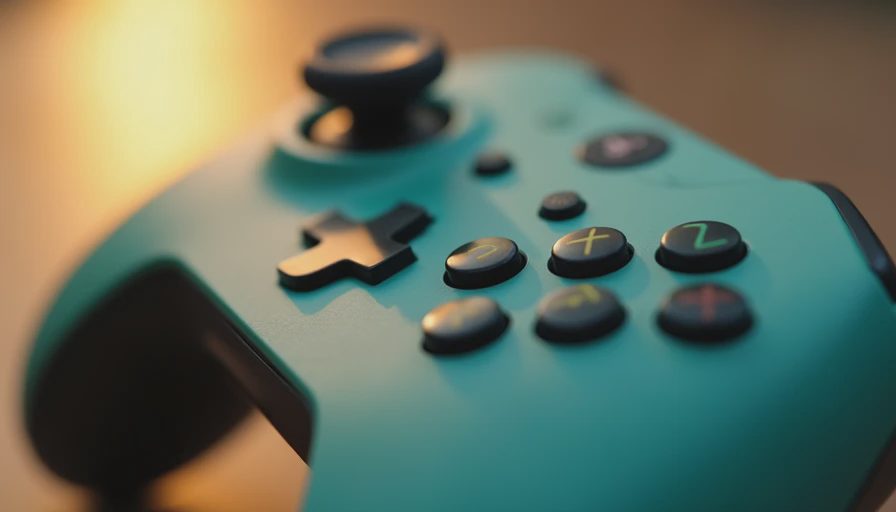
When Retro Influence Becomes Something New
The most successful Indie Games borrow from the past without treating it as a sealed container. A developer may use fixed camera angles because they support spatial tension, not because the PlayStation 2 did. Another may choose low-poly characters to make faces unreadable, turning technical roughness into emotional distance. That is influence with an argument behind it.
Compare this with a release that reproduces old visual noise while using modern design conventions everywhere else. There is nothing inherently wrong with that approach, but the contrast can feel hollow. If the game has unlimited checkpoints, constant guidance, and reward markers on every surface, a nostalgic filter will not recreate the older experience. The friction has been removed while the costume remains.
Some improvements are real. Better text rendering, stable frame pacing, remappable controls, and reliable autosaves can make an older design easier to live with. The danger arrives when convenience changes the shape of attention. A remaster that brightens every shadow may improve visibility while flattening the uncertainty that made an environment feel dangerous. A quality-of-life feature can be helpful and still alter the game’s emotional temperature.
A Practical Way to Choose Your Next Game
Start with the feeling you want, not the genre label. If you want isolation, search for games built around room tone, distance, and restrained music. If you want momentum, prioritize responsive movement and short restart times. If you want a story that respects your intelligence, look for environmental clues and dialogue that does not explain every implication.
Then check five details before downloading. Confirm the average playtime and whether chapters can be paused cleanly. Watch footage from the actual platform you will use. Read recent reviews for performance issues rather than treating every rating as a universal verdict. Check accessibility options, subtitle quality, and controller layouts. Finally, identify the game’s main activity and ask whether you want to repeat it for several hours.
This process works because Indie Games often have stronger identities than larger releases. A major production can disguise an unsuitable loop beneath impressive presentation. A small game usually reveals its argument quickly. If the movement feels wrong after ten minutes, no amount of lore will necessarily rescue it. If the central interaction already feels expressive, modest production values become much easier to accept.
The Games Worth Remembering
The Indie Games that stay with me are rarely the ones with the most marketable premise. They are the ones that make a small decision and follow it with unusual discipline. A hallway remains empty long enough to become uncomfortable. A menu uses plain language because the character has no patience for ceremony. A final room refuses to provide the clean emotional release that a larger production would consider mandatory.
That kind of work understands that memory is not a screenshot. It is a sequence of sensations: the pause before opening a door, the low electrical hum beneath a menu, the realization that a familiar route has changed. Technical limitations can help create those sensations, but they are not enough by themselves. Someone still has to choose what to withhold.
For readers who have less free time now, the goal is not to play everything. It is to find the few releases that deserve sustained attention, then meet them without rushing toward the next recommendation. The best Indie Games do not merely imitate the past or fill a gap between blockbuster launches. They make a smaller world feel complete, and sometimes that world keeps its light on after the console is off.




No notes yet — write the first one.