Fallout 4 is often remembered as the bright, busy entry in Bethesda's post-apocalyptic series, the one with settlements, voiced protagonists, and an interface that seemed determined to turn every object into a component. That description is accurate, but incomplete. Beneath the crafting menus and familiar jokes is a game about reconstruction: what people build after catastrophe, what they preserve, and what they quietly abandon. Returning to it now, with less free time and more suspicion of open-world obligation, reveals a work less coherent than its predecessors but more emotionally complicated than its reputation suggests.
A brighter wasteland with a colder center
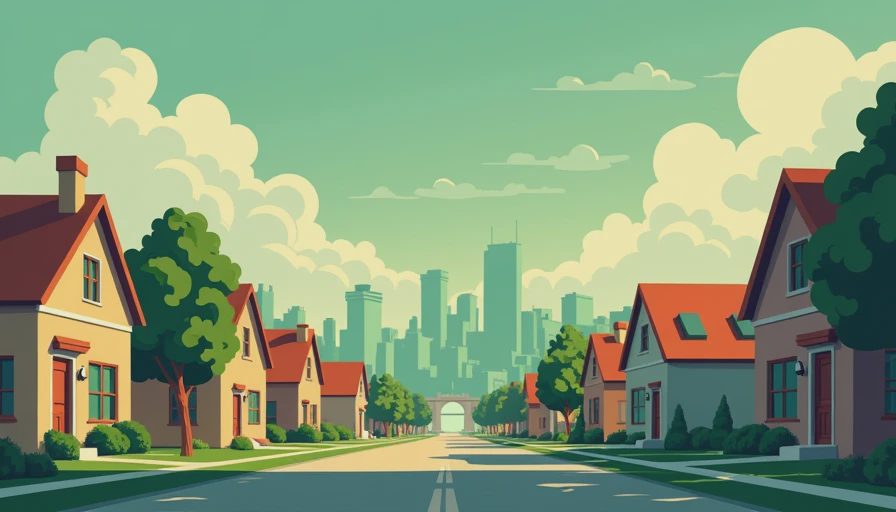
The first hours establish an unusual contrast. The prewar suburbs are clean, symmetrical, and almost aggressively ordinary. Then the bombs fall, the calendar jumps forward, and the same streets become gray corridors of collapsed homes, dead trees, and rooms arranged like interrupted memories. Fallout 4 makes this transition quickly, perhaps too quickly, but the environmental idea remains strong: domestic life has not disappeared so much as been left behind in place.
Boston and the surrounding Commonwealth are not simply a collection of combat arenas. They are a filing system for loss. A nursery, a terminal, a skeleton beside a mattress, or a locked office can imply a small story without requiring a cinematic explanation. The game is strongest when it trusts these arrangements. It is weaker when every quiet discovery eventually points toward another firefight and another inventory screen.
That tension defines much of Fallout 4. It wants to be a reflective role-playing game about memory, but it also wants to be a responsive shooter with a weapon for every mood. The collision is not always elegant. It is still interesting.
The shooting finally has weight
One improvement is difficult to dismiss: Fallout 4 feels better in motion than its predecessors. Earlier entries in the modern series often treated gunplay as a means of delivering statistics. Here, rifles kick, automatic weapons rattle, and close-range encounters have a physical immediacy. VATS remains available, but real-time aiming is no longer something to endure between dialogue choices.
That change alters the entire rhythm of exploration. A ruined building can be read as a story space, then become a tactical problem when a group of raiders moves through its rooms. A feral ghoul is not merely a health value; it is a fast, ugly interruption that changes how you read a hallway. The improved combat does not make the role-playing systems deeper by itself, but it gives the world a stronger pulse.
The cost is that character builds can feel less distinctive than they once did. The perk system is approachable, and its poster-like presentation is memorable, but many choices lead back toward better damage, better survival, or more efficient scavenging. The numbers are visible. The personality between them is sometimes thinner.
Settlements, labor, and the fantasy of repair
The settlement system is often treated as Fallout 4's defining feature, though it can also feel like an alternate game attached to the main one. Clearing a neighborhood, connecting a power line, placing beds, and defending walls offers a satisfying sequence of visible improvements. A ruined location changes because of your labor. That direct relationship between action and environment is rare in large open worlds.
It is also a strangely revealing system. The player gathers wood, steel, adhesive, and circuitry from a society that has already been stripped to its foundations. Every improvement requires more dismantling. A desk becomes screws. A ruined house becomes concrete. The game turns recovery into logistics, then asks whether logistics can resemble hope.
For some players, settlement building becomes a calming evening ritual: twenty minutes of aligning walls at Sanctuary Hills, assigning beds, and making the lights work. For others, it is an administrative burden interrupting the story. Both reactions are reasonable. Fallout 4 does not always explain why a settlement matters beyond its utility, but the act of making one habitable can carry more emotional force than a scripted speech.

A protagonist who speaks, and what gets lost
The voiced protagonist was a major structural change. Nate and Nora give the opening a recognizable human texture, and their prewar life gives the central search a clear emotional direction. Hearing a character react to the Commonwealth can make a bleak room feel less empty. It can also limit the player in ways earlier games did not.
Fallout 4 frequently presents dialogue choices that sound different but lead to nearly identical outcomes. Sarcasm, agreement, refusal, and questions can become variations on a predetermined sentence. The performance adds immediacy while reducing interpretive space. Instead of supplying a voice for an imagined character, the player often selects a tone for a character who already exists.
This matters because Fallout 4 is built around identity. The game asks what a parent will sacrifice, whether a person can trust institutions, and how technology changes the meaning of family. Those questions deserve sharper role-playing tools than the dialogue wheel usually provides. The story still has good ideas, but the interface often files them into four broad response categories.
The factions are arguments, not answers
The major factions work best when understood as competing systems rather than simple moral teams. The Minutemen represent local protection and mutual responsibility, but their weakness is endless maintenance. The Brotherhood of Steel offers discipline, hardware, and a confident hierarchy, while treating dangerous technology as something to control. The Railroad protects artificial people and often operates through secrecy. The Institute offers scientific power insulated from ordinary human consequence.
None of these groups is perfectly persuasive, and that is the point. The game asks what kind of future can survive, not merely which faction has the coolest armor. Its conclusion can feel blunt because the routes eventually narrow toward destruction or allegiance, but the underlying conflict remains relevant. Reconstruction requires values, and values create exclusions.
Fallout 4 is less interested in asking whether the world can return to normal than in asking who gets to define normal afterward. That question gives the faction storyline a colder, more durable edge.
Is Fallout 4 worth returning to?
For a first playthrough, Fallout 4 remains an accessible entry point: shooting is responsive, exploration is generous, and the map continually offers another strange building or improvised story. The Game of the Year edition includes the substantial Far Harbor expansion, whose foggy island setting and more restrained investigation often feels closer to the series' older strengths. Nuka-World takes a more playful, theme-park approach, while Automatron adds mechanical enemies and customization.
A returning player should resist treating the game as a checklist. Skip some map markers. Let settlements remain imperfect. Follow a radio signal because its sound bothers you, not because a quest log assigned it. The best Fallout 4 sessions often happen when the main plot recedes and the player spends an hour moving through an unfamiliar district without optimizing anything.
On PC, community patches and mods can address technical irritation, expand settlement tools, or alter survival rules. On console, the unmodified experience still has enough texture to carry a focused run. The key is choosing a smaller intention: explore the coast, build one convincing town, complete Far Harbor, or simply walk until the music stops.
Higher resolution is not the same thing as higher memory. Fallout 4 survives not because every system aged perfectly, but because its damaged spaces still know how to hold a thought. It is a messy game about making order from remains. Sometimes it becomes too bright, too talkative, and too eager to turn grief into a reward loop. Then a door opens onto a quiet apartment, dust moves through the light, and the old signal returns. For a few minutes, the wasteland feels less like content and more like a place that remembers you.





No notes yet — write the first one.