Team Fortress 2 is old enough to have become part of the furniture. It sits in Steam libraries, YouTube retrospectives, and the memory of anyone who spent an afternoon learning that a bright cartoon shooter could contain an almost severe understanding of teamwork. Plenty of multiplayer games have borrowed its classes, silhouettes, and objective structure. Very few have understood why those parts fit together.
The useful question is not whether Team Fortress 2 still looks modern. It does not, and that is part of the point. The more interesting question is whether its design still gives a player something difficult to find in current service games: a readable battlefield, a distinct role, and room to become better without turning improvement into homework.
A shooter built from readable contradictions
The visual language is immediate. The RED and BLU teams are separated by color, each class has an exaggerated outline, and weapons communicate their purpose through shape and animation. A Heavy is not merely a high-health character; he is a moving warning sign. A Spy is not just a stealth class; he is a break in the assumptions everyone else is making.
That clarity makes the game feel almost old-fashioned now. Modern shooters often pursue visual detail so aggressively that enemies dissolve into foliage, particle effects, and decorative clutter. Team Fortress 2 uses less information to communicate more. The battlefield can be chaotic, but it is rarely visually confused. You can identify the problem before you understand the entire solution.
The classes also contradict one another in productive ways. The Scout is fragile but fast. The Engineer is powerful only when given time and space. The Medic is mechanically vulnerable but strategically indispensable. These are not balanced as interchangeable weapons platforms. They are social roles expressed through controls. Even failure teaches you something about the shape of the team.
A good round has the rhythm of a small argument. The enemy builds a sentry nest. Your team searches for a weakness. A Spy creates an opening, a Soldier takes the high ground, and the Demoman turns a doorway into a temporary no-go zone. The match is not elegant because everyone is equally capable. It is elegant because unequal capabilities create dependence.
Why the comedy still matters
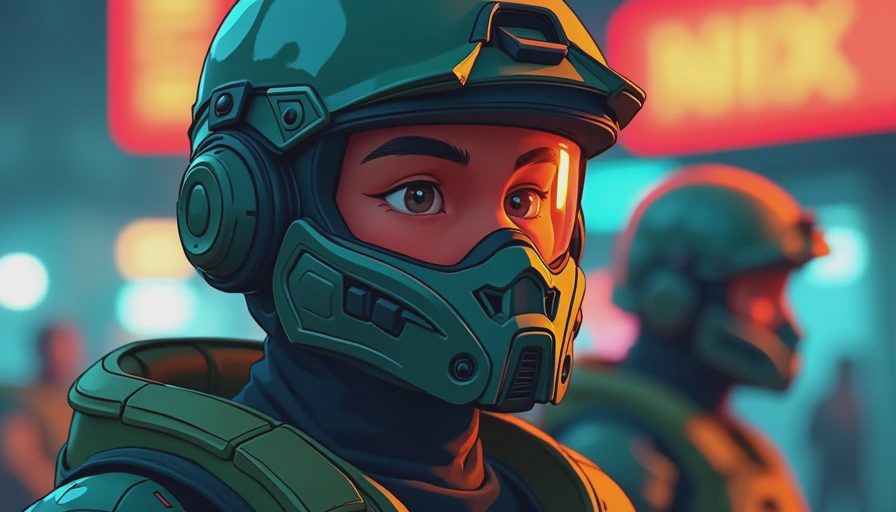
Valve’s humor is not painted on top of the mechanics. It is embedded in the way the game refuses to treat violence with solemnity. Characters shout, boast, panic, and die with theatrical absurdity. The announcer sounds as if every captured point has become a minor emergency in a world that is otherwise too ridiculous to save.
That comedy gives the violence a strange emotional temperature. The game is not realistic, but it is not weightless either. A teammate can spend an entire life guarding a cart while the rest of the team wanders into a trap. A Medic can carry the round and receive almost no recognition. The jokes soften the surface while making the underlying dependence easier to feel.
Team Fortress 2 also understands the intimacy of repeated failure. You recognize the Pyro who always attacks from the same corridor. You learn the Engineer’s favorite corner. You begin to anticipate the Soldier who fires at his own feet to reach a balcony. These habits become part of the map’s unofficial geography. The community writes a second rulebook through repetition.
Its sound design deserves equal credit. Footsteps, weapon reports, reload motions, and character callouts create a practical audio map. The music is memorable, but the smaller sounds are what make a familiar match feel inhabited. A distant sentry warning can change your posture before you have consciously identified its source.
The update history is part of the experience
Team Fortress 2 did not remain fixed after release. Its class updates, hats, weapons, maps, and economy transformed the game over years. Some additions expanded the possibilities; others complicated the once-clean relationship between class identity and equipment. The history is not a simple story of improvement.
The cosmetic economy made the game culturally enormous, but it also introduced a layer of collecting that could distract from the original pleasure. A hat might be funny, valuable, or visually perfect with a particular loadout, yet none of those facts make a weak weapon suddenly interesting. The game’s enduring strength remains its core movement, combat, and objective design.
The weapon system is where the patch-era philosophy becomes most visible. A sidegrade can change a class’s rhythm without replacing its purpose. The Wrangler alters how an Engineer thinks about a sentry. The Crusader’s Crossbow makes a Medic’s aim part of his healing responsibility. The danger is always that a new item turns a flexible role into a mandatory checklist.
That tension makes Team Fortress 2 unusually useful to study. Balance is not just a matter of damage values. It is also about attention, stress, timing, and what a player believes their job is during a lost round. A small numerical change can create a large emotional shift if it changes who gets blamed or who feels necessary.
Playing it now without turning it into a museum piece
For a returning player, the first few matches can feel noisy. Servers may contain veterans with thousands of hours, unfamiliar maps, custom weapons, and a pace that punishes hesitation. The answer is not to learn everything first. Choose one class with a clear job and let the match explain the rest.
Medic is a direct way to understand team structure, though it can be stressful. Soldier teaches movement, positioning, and the value of high ground. Heavy offers a slower entry point, while Engineer rewards map knowledge and preparation. Scout is exhilarating but exposes every weak habit at once. Pick a role that makes you curious rather than one that seems impressive.
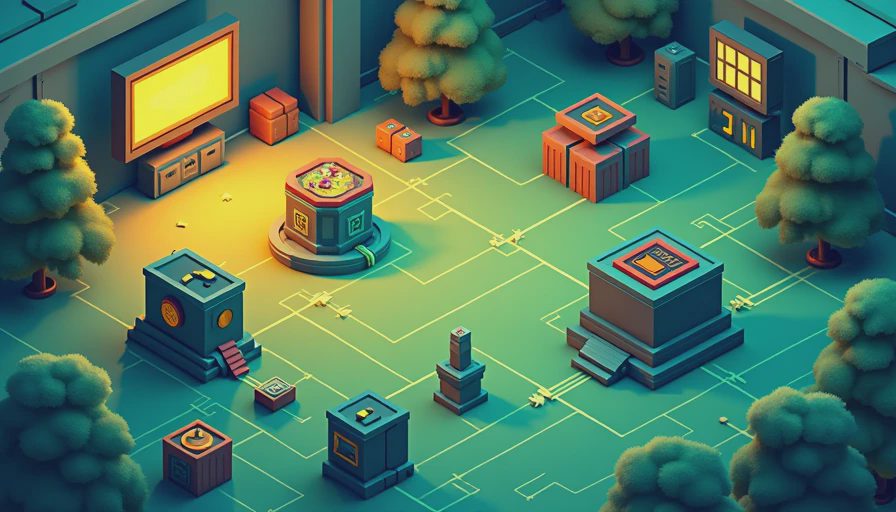
The best maps remain lessons in spatial design. Dustbowl funnels teams into escalating confrontations. Badwater teaches how a payload route can create temporary fronts and retreats. Upward makes height, sightlines, and momentum impossible to ignore. Even when a map becomes familiar, its timing keeps changing with the people inside it.
Do not measure the experience only by wins. Notice whether you understood why a push failed, whether you helped create an opening, and whether your class had a meaningful task. Team Fortress 2 is generous when approached as a conversation with other players, not as a demand to dominate them.
The part that cannot be remastered
A cleaner version of Team Fortress 2 would be easy to imagine: higher-resolution models, improved shadows, modern matchmaking, and a less complicated inventory. Some improvements would be real. Some would only be brighter. The game’s low-poly character design, sharp color blocks, and slightly theatrical animation are not technical leftovers waiting for permission to disappear.
Higher resolution is not the same thing as higher memory. The roughness of the original presentation leaves space for recognition. You remember the silhouette of a class before you remember the texture on its uniform. You hear a voice line and recover an entire argument from years ago. That is not nostalgia functioning as evidence; it is design doing its job.
Team Fortress 2 remains compelling because it turns limitation into social pressure. Every class is incomplete alone. Every map asks for a different kind of patience. Every successful push briefly aligns a group of strangers around a shared problem, then breaks apart before anyone can preserve it.
That fleeting quality is why the game still matters. It is not a relic waiting for a museum label, nor a perfect object untouched by time. It is a living, uneven piece of multiplayer history. Start a match, choose a job, listen for the first distant alarm, and let the battlefield become legible again. The old machine still has a pulse.


No notes yet — write the first one.