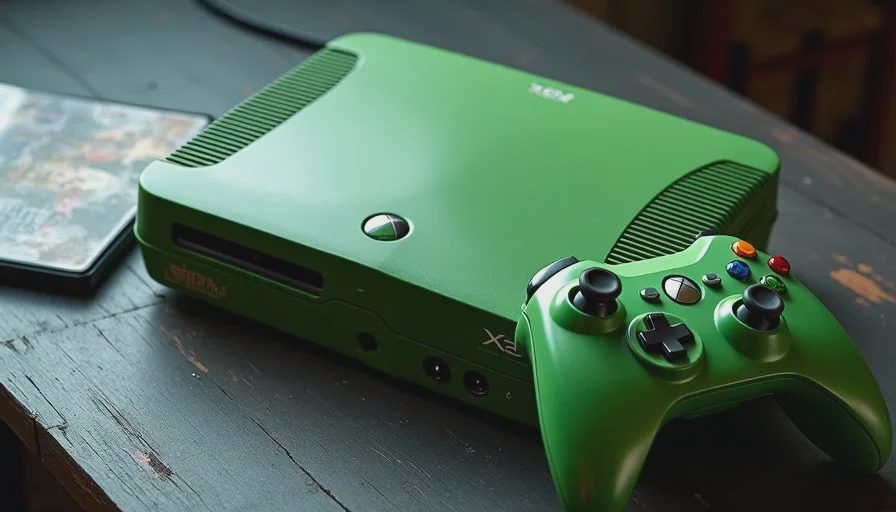
The original Xbox arrived at a useful moment. Hardware was powerful enough to support ambition, yet production budgets had not fully consolidated around the scale that would later define the industry. Publishers could still fund mid-budget projects that did not need to guarantee franchise longevity or universal demographic appeal. The result was a short period in which a game could be visibly strange, tonally uneven, or narrowly obsessive and still reach retail shelves in meaningful numbers.
That window produced a particular flavor of weirdness that has become harder to find. Not the deliberate, heavily marketed eccentricity of certain modern indie titles, and not the polished auteur excess of high-budget experiments. Something more mid-tier and therefore more exposed: games that felt like they had been allowed to follow an odd premise further than good sense might have dictated, without the safety net of either underground credibility or massive resources.
I return to several of these titles not because they are secret masterpieces, but because their specific temperature has grown rarer. They carry the marks of a production culture that could still tolerate inconsistency and narrative risk at a scale above pure independent work.

Permission Structures and Their Disappearance
Mid-budget weirdness required a particular alignment of factors. A publisher had to be willing to green-light a project that could not be easily described in a single marketing sentence. The team had to be small enough to maintain a coherent, if idiosyncratic, vision, yet large enough to deliver a full retail package. Hardware had to be capable of supporting the desired presentation without demanding the kind of technical overhead that forces conservative design.
The original Xbox, along with its contemporaries, still operated inside that alignment. Games could be green-lit on the strength of a distinctive mechanic, a strong visual personality, or a writer’s particular voice. Failure states were less existential for the publisher than they would later become. The consequence was a visible population of titles that felt personal and slightly unoptimized in the best sense: too committed to their own logic to sand down every rough edge for broader accessibility.
Contemporary mid-budget space has narrowed. Costs have risen. Marketing has become more dependent on immediate clarity and existing intellectual property. Risk is managed through established genres, recognizable hooks, and systems that have already proven their retention metrics. Weirdness still exists, but it has largely migrated to the independent sphere, where budgets are lower and the expected audience is already self-selecting. What has grown scarce is the mid-tier project that could afford full voice acting, substantial level content, and retail presence while remaining stubbornly itself.
The Texture of Specificity
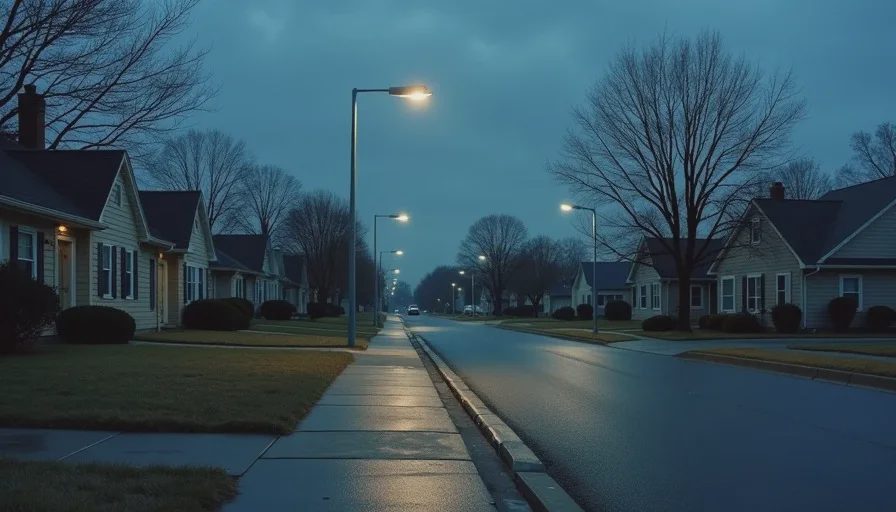
The games that remain interesting from this period share a quality of specificity that feels less engineered than permitted. A suburban setting might be rendered with slightly wrong proportions and an undercurrent of menace that never fully resolves into conventional horror. A combat system might prioritize a single eccentric fantasy over balanced genre expectations. A narrative might commit to a tonal register that alienates as many players as it attracts. These choices were not always successful. They were rarely focus-grouped into neutrality.
That neutrality is the quieter loss. Many current games at comparable ambition levels arrive already smoothed. Their strangeness, when present, feels calculated—an aesthetic layer rather than a structural commitment. The older mid-budget titles often felt as if the strange premise had been allowed to dictate terms to the rest of the production. The result could be uneven. It could also produce moments of genuine atmospheric or conceptual density that more controlled projects rarely risk.
I notice the difference in how these games occupy memory. A polished modern title may deliver a more consistent experience across its runtime. The older, weirder mid-budget games tend to leave sharper, more isolated impressions: a particular level’s mood, a mechanical idea that never fully repeats, a narrative turn that refuses to comfort the player. The inconsistency itself becomes part of the signature.
What the Current Landscape Rarely Funds
It is still possible to find strange games. It is rarer to find them operating at the production scale the original Xbox mid-budget titles once occupied. Independent development has absorbed much of the eccentric energy, often with greater formal freedom and lower fidelity. High-budget development can still produce oddity, but usually inside the protective frame of an established franchise or a heavily marketed auteur brand. The middle ground—the fully produced, retail-scale game that is allowed to remain awkwardly itself—has thinned.
The loss is not primarily one of entertainment value. It is a loss of a certain permission structure that once let designers follow narrow, personal, or simply odd premises further than the current risk environment encourages. Those premises did not always result in lasting classics. They did result in a population of games whose textures still feel distinct because they were never fully processed for maximum acceptability.
I keep a small number of these Xbox titles in rotation for that reason. They function as a reminder of a brief industrial moment when mid-budget production and genuine weirdness could still occupy the same shelf space. The hardware has been surpassed. The economic conditions that made their particular strangeness viable have largely moved on. The residual temperature of that permission is what remains worth excavating. It is harder to find in the current catalog, and more valuable for the absence.





No notes yet — write the first one.