
The phrase “dad gaming” usually arrives with a set of assumptions. Reflexes have slowed. Tolerance for difficulty has dropped. Preference has shifted toward shorter sessions, easier modes, and games that do not punish interruption. Some of those observations are occasionally true. They are not the center of the change.
What actually becomes visible is time. In earlier years the evening could still feel elastic. A session that ran long simply ran long. Completion was a matter of persistence rather than of scheduling. Later the outer edge of the evening hardens. Work has already taken its share. Sleep has a non-negotiable claim. What remains is a finite block that will not expand. Inside that block the old metrics of volume and mastery begin to lose relevance. Density starts to matter more.
I am not a father. The pattern still applies. At thirty-one the available hours have already contracted enough that I feel the same recalibration many players describe when they use the shorthand of dad gaming. The question is no longer how much of a game I can finish. It is how much residual presence a session leaves behind once the screen is dark.

The Shift in Measurement
Younger play often measures value in accumulation: hours logged, systems mastered, collectibles cleared, difficulty thresholds overcome. The game is a territory to be fully occupied. Limited time makes that model expensive. A forty-hour campaign with extensive side content begins to look less like generosity and more like a claim on evenings that already have competing demands. The player starts asking a different question: does this hour leave a distinct afterimage, or does it disappear into the larger grind of completion?
Sixth-generation games frequently answer that question more reliably than many contemporary releases. Their shorter campaigns, tighter focus, and lower volume of secondary systems produce a higher ratio of presence to time spent. A focused action game from 2002 can deliver a complete mechanical and atmospheric argument in eight to twelve hours. A modern title of similar ambition often requires two or three times that length, much of it spent inside parallel progression loops that dilute rather than concentrate attention. The longer game can still be excellent. It is simply less efficient at the specific task of leaving a durable impression inside a limited window.
Skill decline is a convenient external explanation. It keeps the focus on the player’s body rather than on the design of the games and the structure of adult time. In practice I do not find my ability to learn systems or execute precise inputs meaningfully reduced. What has changed is the cost of investing those abilities into experiences that do not return proportional density. A punishing difficulty curve that once felt like a worthy test can now feel like a poor exchange rate for the hours it consumes. The preference for experiences that respect scarcity is not a lowering of standards. It is a more accurate reading of the available resource.
Scarcity as a Design Preference
Once time becomes visible, certain design habits grow harder to tolerate. Extensive tutorialization that assumes the player has never seen a genre before. Side-activity maps that treat every corner of the world as obligatory. Progression systems that require daily or weekly engagement to remain current. Each of these features can be defended as content or as retention design. Each also assumes an elasticity of attention that many adult players no longer possess.
The games that remain compelling under the new measurement are often those that declare their boundaries early and then stay inside them. They teach their language, test it under increasing pressure, and end before the language has to be padded with secondary loops. They treat the player’s attention as finite and therefore valuable. That treatment registers as respect rather than as simplification.
I notice the same recalibration in the way I revisit older titles. The question is no longer whether I can still clear them at their original difficulty. It is whether the residual temperature still justifies the evenings they require. Some do. Many modern games with superior technical presentation do not. The difference is not nostalgia. It is the visibility of the clock.
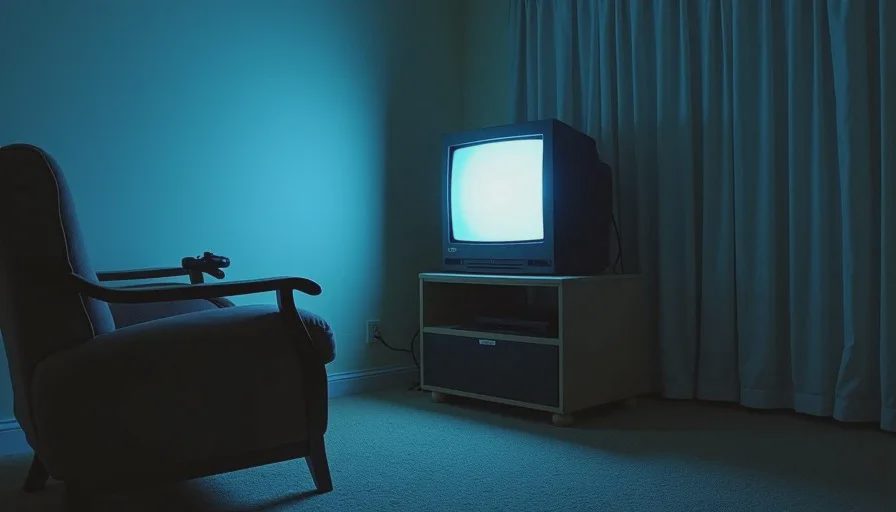
What the Label Obscures
Calling the shift “dad gaming” risks turning a structural change in the experience of time into a mild cultural joke about declining skill and domestic responsibility. The joke is harmless until it becomes the entire explanation. The more precise description is that adult players begin to experience their free hours as a non-renewable resource and then adjust their preferences accordingly. They start measuring games by the density of the afterimage rather than by the volume of content or the height of the mechanical ceiling.
This measurement does not require children. It only requires the recognition that the evening has an outer edge and that the edge does not move. Once that recognition arrives, a large part of the contemporary catalog begins to look differently calibrated—designed for players whose time still feels elastic. The games that continue to matter are the ones that already understood scarcity, whether through hardware limits, mid-budget focus, or deliberate editorial restraint. They do not need the player to become younger or faster. They need the player to remain present inside a finite window.
Time became visible. The rest of the adjustment follows from that fact. Skill was never the primary variable. The primary variable was the sudden, practical knowledge that the session would end and that what remained afterward needed to justify the hours it had claimed.





No notes yet — write the first one.