Firewatch begins with a job that sounds almost medicinal: leave the noise of ordinary life behind, climb a tower in Wyoming, and watch for smoke. Then the radio crackles. A woman named Delilah is suddenly there, close enough to talk to but safely beyond reach. Firewatch understands that loneliness is not simply the absence of people. Sometimes it is the presence of one person you cannot touch.
Released in 2016 by Campo Santo, the game is a first-person narrative adventure about Henry, a man who accepts a seasonal lookout position after his wife develops early-onset dementia. That premise could have been handled as prestige melodrama. Instead, the game mostly keeps its pain in the margins: in pauses, evasions, unfinished sentences, and the way a player chooses to answer a voice coming through a radio.
A walking simulator with actual tension
The phrase walking simulator has often been used as an insult, as if movement without combat were automatically a failure of design. Firewatch makes a better case for the form. Walking is not filler here. It establishes distance, gives the landscape a readable geography, and lets tension arrive gradually rather than through a flashing threat indicator.
Henry carries a map and compass, follows trails, climbs ladders, and squeezes through narrow gaps in rock. Those actions are simple, but they create a useful physical relationship with the world. You are not selecting locations from a menu. You are learning how the place connects. A shortcut found on the second day matters because you remember the route, not because a progression system awards it.
The design also understands limited free time. A complete playthrough usually takes around four to six hours, depending on how thoroughly you explore and how quickly you move through conversations. That length is not a weakness. Firewatch has enough room to establish attachment without asking the player to live in its atmosphere for forty hours.
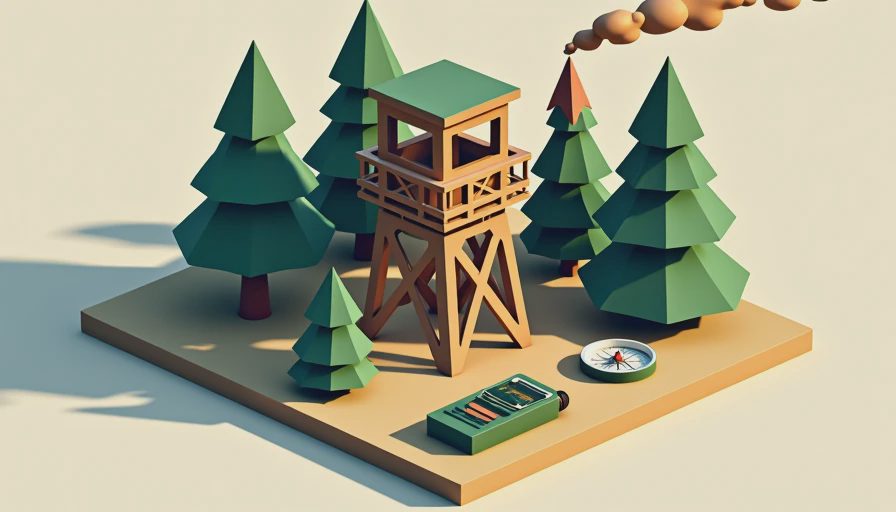
The radio is the real interface
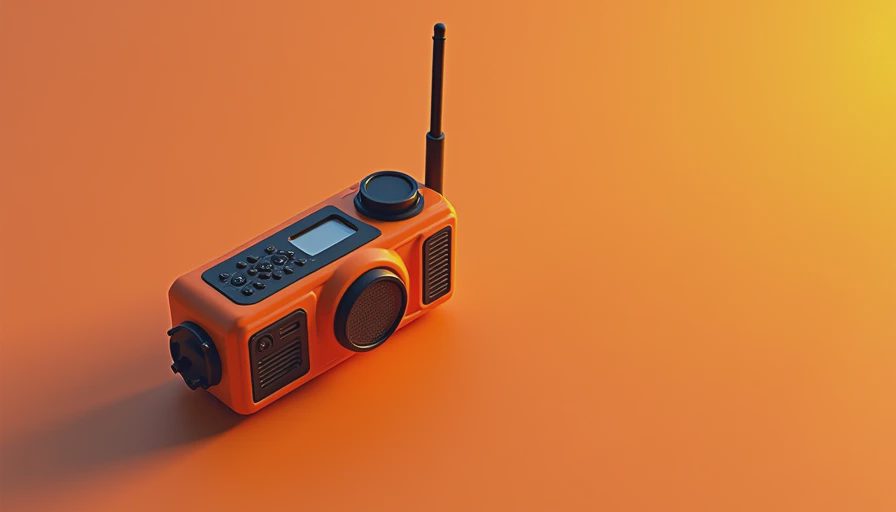
Most of the game’s important choices arrive through the handheld radio. Delilah asks questions, makes jokes, changes the subject, and occasionally says something that sounds more revealing than she intended. Henry responds from a selection of lines, but the system is not pretending to create an infinitely expressive role-playing character. It is giving the player control over tone.
You can be direct, defensive, flirtatious, dismissive, or merely tired. Those choices do not produce a branching epic with radically separate campaigns. They shape the emotional texture of the same troubled relationship. That limitation is important. The game is less interested in letting you rewrite Henry than in asking which version of him you are willing to inhabit.
The radio also creates a strange intimacy. Delilah is represented by a voice, a name, and a few implied details. The missing body becomes part of the fantasy. You fill in the person on the other end, then discover that your imagined version was built from omissions. Firewatch knows that communication can feel honest precisely because it is incomplete.
Color, weather, and the false promise of escape
The visual design is unusually confident. Orange sunsets, blue shadows, green forests, and distant mountain shapes make the wilderness feel almost too beautiful to distrust. The bold palette is not just an aesthetic signature. It gives the player an emotional map. Warm light suggests safety, while narrow ravines and dark trees make ordinary movement feel watched.
Yet this is not a wilderness survival game. Henry does not hunt, craft shelter, manage hunger, or fight animals. The absence of those systems is deliberate. The landscape is not an opponent to defeat. It is a temporary container for avoidance. Henry has come to Wyoming to escape a life that cannot be repaired by changing scenery, and the game keeps placing evidence of that failed escape in his path.
Firewatch becomes strongest when the landscape refuses to behave like a postcard. A distant structure, a cut fence, a radio transmission, or an abandoned camp can turn the same trail into a different psychological space. The map stays stable. Your interpretation does not.
Where Firewatch risks losing its nerve
The game’s central mystery creates momentum, but it also exposes its most conventional instincts. Suspicious teenagers, secret research, missing people, and hidden government activity push the story toward thriller territory. For a while, that escalation works. It gives Henry something concrete to investigate when emotional honesty feels impossible.
The problem is not that the mystery exists. The problem is that mystery language can make private grief feel smaller than it is. The game sometimes seems to believe that a dramatic explanation is needed to validate the player’s unease. In reality, the strongest threat in Firewatch is more ordinary: Henry is running away from responsibility, and Delilah is helping him do it because she also wants an arrangement without consequences.
The final act partially understands this and partially retreats from it. The revelations are not meaningless, but they are less satisfying than the quiet buildup. The game has trained you to listen for emotional subtext, then occasionally hands you plot machinery instead.
The ending and the cost of not looking back
Firewatch’s ending is brief, unsentimental, and divisive for good reasons. It does not offer the grand emotional reunion that a more conventional game might promise. Henry cannot solve his marriage by becoming better at wilderness observation. He cannot convert a summer of radio intimacy into a permanent relationship simply because the conversations felt real.
That refusal is painful, but it is also the point. Temporary closeness can matter without becoming a future. A person can help you survive a period of your life and still be someone you must leave behind. The game’s final movement asks whether Henry learned anything or merely found a more picturesque way to postpone the answer.
Some players will find the conclusion abrupt. I did too, at first. But its awkwardness has stayed with me longer than a cleaner resolution would have. Firewatch ends by removing the landscape’s protective distance. The tower, the radio, and the trails were never a new life. They were an interval.
Should you play it now?
Yes, if you want a focused narrative game built around conversation, atmosphere, and small acts of attention. Play it with headphones, preferably in a single weekend session. The sound design carries as much weight as the writing: insects, wind, footsteps, radio static, and sudden quiet all make the world feel inhabited without filling every second with music.
Do not approach it expecting a survival system, a detective game with exhaustive clues, or a branching story where every dialogue choice transforms the ending. Its pleasures are narrower and more human. You are watching two damaged adults construct a temporary shelter from words, then discovering that words cannot hold forever.
Firewatch also remains valuable as a record of a particular indie design moment. It arrived when short, authored games were proving that restraint could be commercially and artistically meaningful. Its limitations are visible now, especially in the late plot turns, but its confidence is still rare. It knows when to let a road, a voice, or a stretch of silence do the work.
Higher resolution is not the same thing as higher memory. Firewatch does not need a technical overhaul to justify returning to it. Its flat colors, deliberate walking speed, and imperfect conversations are part of the preserved signal. A cleaner version might look more contemporary while feeling less like a lonely summer that ended before anyone was ready.
If you have four quiet hours and a tolerance for unresolved feeling, take the trip back to the tower. Bring headphones. Let the radio interrupt the silence. Then notice what remains after the final helicopter leaves: not the mystery, exactly, but the uncomfortable knowledge that being heard is not the same as being known.





No notes yet — write the first one.