Ray Tracing arrived in mainstream gaming as both a technical promise and a kind of quiet argument. Here was a way to make light behave less like a painted instruction and more like something moving through a room. Reflections could contain the world behind the camera. Shadows could soften with distance. A puddle could become a second, unstable window. Ray Tracing was not merely another resolution checkbox, although it was often marketed that way. It changed what developers could ask a scene to remember.
For players who grew up with the PS2, original Xbox, and GameCube, the appeal is complicated. Those machines did not simulate light in a physically accurate way, but their limitations produced strong visual identities. A dark corridor stayed dark because the hardware could not afford much else. A reflection was often a blurry texture, yet that blur could feel more suggestive than a perfect mirror. Higher resolution is not the same thing as higher memory.
What Ray Tracing Actually Does
Traditional game lighting usually relies on rasterization. The engine converts three-dimensional geometry into pixels and uses carefully prepared tricks to approximate bounced light, reflections, and shadows. These tricks are fast, predictable, and still form the foundation of most modern games. Screen-space reflections, baked global illumination, shadow maps, and reflection probes can create convincing results without tracing every path a light ray might take.
Ray Tracing works differently. The renderer follows virtual rays from the camera or light source, testing where they travel and what surfaces they encounter. That makes it possible to calculate reflections beyond the edge of the screen, shadows that respond more naturally to nearby objects, and indirect light that carries color from one surface to another. The technique is expensive because the game is asking the computer to solve more relationships per frame.
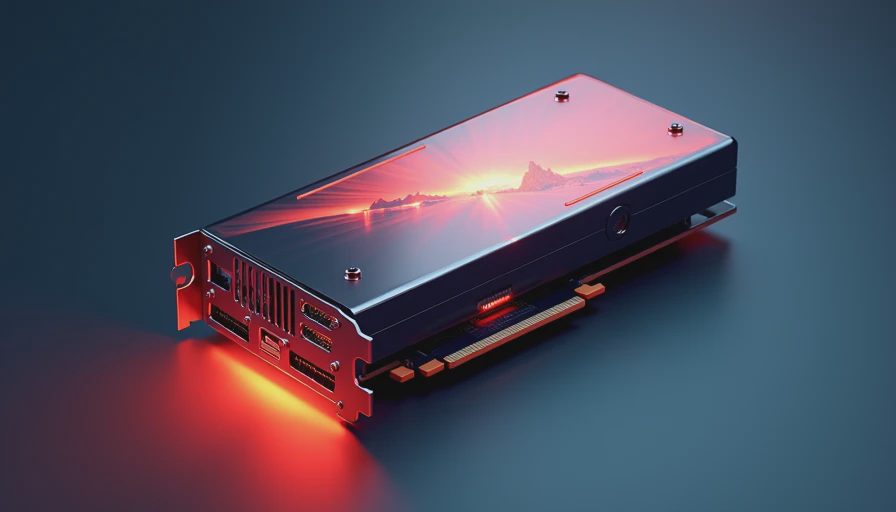
Modern implementations usually combine these approaches. A PlayStation 5, Xbox Series X, or GeForce RTX graphics card does not necessarily render an entire game with pure Ray Tracing. Instead, developers select the effects that offer the greatest visual return. Reflections might use tracing while ambient lighting remains baked. Shadows might be traced only near the player. Upscaling technologies such as Nvidia DLSS, AMD FSR, or console reconstruction then help recover performance.
Why the First Examples Felt So Important
The early excitement came from scenes that exposed the weakness of older approximations. In a conventional reflection, the engine may show only what the camera can already see. Turn away from a storefront, and the reflected image can disappear or become visibly incomplete. With Ray Tracing, the glass can reflect a street that exists outside the current view. The improvement is not always dramatic, but when it works, the scene feels less like a stage set.
Games such as Control used traced reflections and transparent surfaces to make brutalist interiors feel unstable and deep. Cyberpunk 2077 used traced lighting to give neon, wet pavement, and crowded interiors a more coherent relationship. Metro Exodus Enhanced Edition pushed global illumination further, making sunlight and artificial light influence spaces with a consistency that the original version could only approximate.
Yet technical success does not automatically create atmosphere. A perfectly reflective floor can make a room feel like a showroom. A dim, deliberately unreadable corridor can lose its dread when every corner receives a measurable wash of indirect light. Some improvements are real. Some are only brighter. The best examples use the technology to reinforce a visual idea rather than announce the hardware running underneath it.
The Performance Tax Nobody Sees in Screenshots
Ray Tracing has a cost that screenshots conceal. A still image does not show the reduction from 60 frames per second to 30, the uneven frame pacing during combat, or the increased input latency that can follow a heavy rendering mode. On a midrange PC, enabling reflections may require lowering texture quality, crowd density, or resolution. On consoles, players often choose between a performance mode with limited tracing and a fidelity mode with more effects at a lower frame rate.
That decision matters because responsiveness is part of visual perception. A racing game at a stable 60 frames per second can feel more convincing than the same game at 30 with beautiful reflections. A character-action game needs readable timing more than it needs a perfect image of a ceiling lamp. Even in slower adventure games, consistent motion can preserve the sense of inhabiting a place better than additional surface detail.
The practical question is not whether Ray Tracing is good. It is whether a particular effect survives the trade. Reflections in a rainy city may be worth the cost if they transform navigation and mood. Shadows in a fast shooter may be less important than clean motion. I usually test both modes for ten minutes, including a crowded scene, a quiet interior, and a combat encounter. The menu description rarely tells the whole story.
What Older Games Can Teach Modern Lighting
The sixth-generation consoles understood visual suggestion through necessity. Silent Hill 2 used fog not because the developers had discovered a superior atmosphere filter, but because the hardware needed help hiding distance. That constraint became grammar. The fog concealed geometry, softened edges, and made the town feel psychologically incomplete. Replacing it with clear, high-resolution visibility can reveal more while communicating less.
The same principle appears in older reflections and shadows. A texture mapped onto a window might not be physically correct, but it could be placed with artistic confidence. A shadow blob beneath a character could look crude and still make the body feel grounded. When modern remasters replace every approximation with sharper detail, they sometimes remove the small acts of interpretation that made the original world feel haunted.
This does not mean developers should abandon new tools. It means accuracy needs direction. Ray Tracing should serve composition, pacing, and mood. If a room is meant to feel airless, bounced light should not automatically make it more legible. If a character is meant to disappear into a black hallway, a technically accurate rim light may be a mistake. Fidelity is not neutral; it changes what the player is permitted to notice.
How to Choose the Right Graphics Mode
Start with the game’s core rhythm. For competitive shooters, racing games, and character-action titles, choose the mode that offers the most stable frame rate unless the visual effect changes gameplay readability. For exploration-heavy games, test whether traced reflections reveal useful spaces or simply make puddles impressive. For horror, compare darkness rather than brightness. The better mode is the one that preserves tension while keeping movement consistent.
On PC, use an overlay such as the Xbox Game Bar performance panel, Steam’s frame counter, or a utility like MSI Afterburner. Look for sustained frame rate and frame-time consistency instead of a single peak number. If enabling the effect causes stutter, try lowering its quality, reducing volumetric effects, or using DLSS or FSR on a quality setting. A modest improvement at a stable frame rate usually feels better than an unstable showcase.
The Memory Behind the Image
Ray Tracing is an important rendering tool, not a replacement for artistic judgment. It can make a wet street persuasive, a window deep, and a shadow responsive to the world around it. It can also flatten mystery, consume performance, and turn carefully designed darkness into another surface waiting to be measured.
That tension is why the technology interests me more than its marketing. It sits between the machine and the memory of a place. A modern game can become cleaner and less alive at the same time. The question is not whether the image is accurate, but whether the light still leaves room for the player to feel something that cannot be rendered.




No notes yet — write the first one.