A modern port can make an older game dramatically easier to live with. Widescreen support removes the black bars. Higher resolution and stable frame rates reduce visual strain. Save-anywhere options or more frequent checkpoints lower the cost of experimentation. Controllers can be remapped. Load times shrink. The game becomes more compatible with contemporary displays, schedules, and expectations. These gains are concrete and, for many players, decisive.
What is less frequently measured is the corresponding shift in temperature. The original versions of many sixth-generation titles were shaped by constraints that modern ports systematically relax: fixed 4:3 framing, limited draw distances, CRT-specific bloom and scanline behavior, slower or more deliberate loading rhythms, and control schemes tuned to the hardware of the time. When those constraints are lifted, the game often becomes clearer, faster, and more convenient. It also becomes less particular. The residual feeling that once clung to the experience can thin even as the technical presentation improves.
I have spent enough evenings with both original hardware and later ports to feel the difference in posture and attention. The port asks less of me. It also leaves a lighter imprint.

Framing, Visibility, and Spatial Pressure
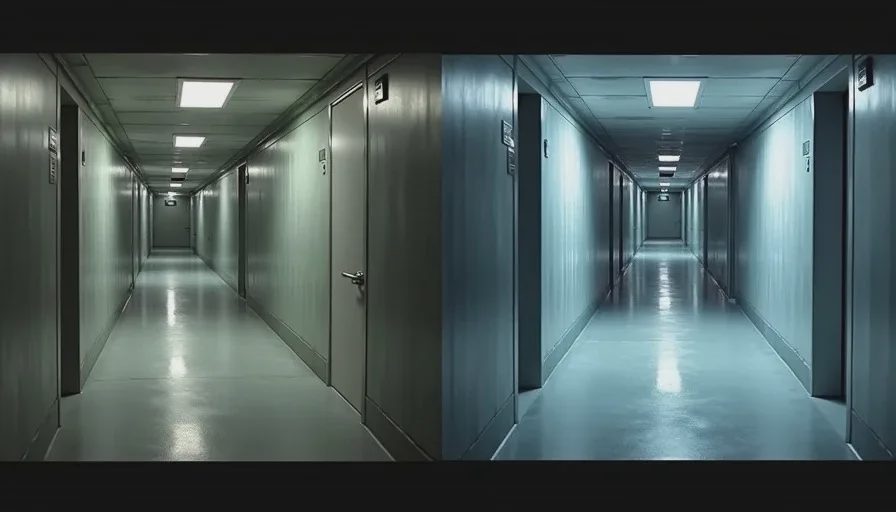
The move from 4:3 to widescreen is usually treated as pure gain. More of the world becomes visible. Cinematic compositions open up. In practice the wider frame frequently alters the original spatial tension. Many older games used the narrower aspect ratio to control information. Corridors felt more enclosed. Threats could approach from outside the player’s immediate view with greater ease. The limited lateral visibility worked in partnership with fog, lighting, and enemy placement to maintain a continuous low-level uncertainty.
Widescreen ports that simply expand the view without redesigning the level logic give the player more information than the original systems were built around. The extra visibility is comfortable. It also reduces the need for the cautious, incremental movement the game once encouraged. Some ports attempt to compensate with adjusted camera FOV or redesigned framing. Many do not. The result is a game that is easier to read and less effective at making the player feel spatially provisional.
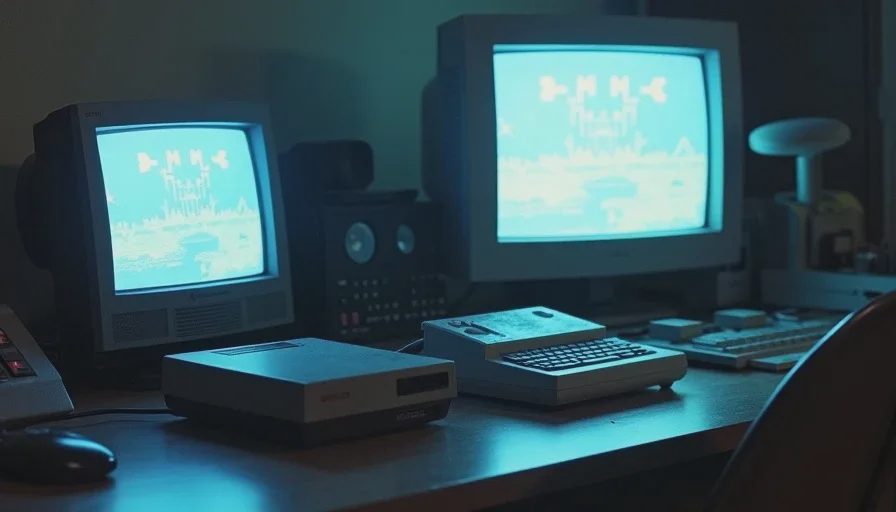
CRT-specific presentation produced a parallel effect. Soft bloom, mild geometric distortion, and the particular way low-resolution textures interacted with scanlines created a material temperature that flat-panel displays do not reproduce. Clean digital output reveals more detail and simultaneously removes a layer of optical mediation that had been part of the original atmosphere. The image becomes more accurate to the asset data and less accurate to the way the game was once experienced in living rooms. Convenience and fidelity rise. The specific optical residue declines.
Rhythm, Loading, and the Cost of Seamlessness
Original loading behavior was often visible and sometimes lengthy. Those intervals created forced pauses in which the previous section’s temperature could persist. Modern ports frequently reduce or hide loading through better hardware utilization, background streaming, or SSD speeds. The game becomes more continuous. The structural breathing room shrinks.
Save systems follow the same pattern. Many originals tied progress to specific points or limited resources. Ports commonly add autosave, manual save-anywhere options, or more generous checkpointing. The risk of significant loss drops. The heightened attention that once accompanied the knowledge of irreversible progress also drops. Players can experiment more freely. They also have less reason to treat intermediate stretches as consequential.
Control refinements produce similar trade-offs. Analog movement, modern camera options, and remappable inputs reduce the learning cost and the frequency of unintended struggle. The original schemes, tuned to the controllers and expectations of their time, often required a more deliberate physical relationship to the character. That deliberateness could feel clumsy. It also kept a continuous low-level demand on attention that smoother ports often relax.
Measuring the Residual Difference
The practical test I use is the day-after memory of the space and the session. After playing the same sequence on original hardware or a faithful emulation and then in a modern port, I ask which version leaves the stronger spatial and emotional afterimage. Technical clarity favors the port. Residual density frequently favors the original. The port is easier to recommend to someone encountering the game for the first time. The original is often the version that still feels inhabited rather than merely displayed.
This is not an argument against ports. Accessibility, preservation, and the simple ability to play older games on current hardware matter. The useful distinction is between ports that treat the original temperature as something to be preserved where possible and ports that treat every constraint as a defect to be removed. The former can deliver convenience without fully neutralizing the experience. The latter produce versions that are easier to live with and harder to remember with the same force.
For a player whose free time is already limited, the choice is practical. A port that gains convenience while losing temperature costs evening hours without returning the specific density that made the game worth revisiting. One that manages to keep the denser residual feeling intact becomes the preferred way to return. Higher resolution, wider frames, and smoother systems are real improvements. They are not automatic carriers of the same memory. The temperature is what I am measuring. It is also what many ports, in the pursuit of convenience, quietly leave behind.




No notes yet — write the first one.